


Quick education for will, trust, beneficiaries, guardianship, healthcare documents, asset organization, and legacy planning conversations before your family needs them.
Will and trust education helps families organize important decisions about assets, beneficiaries, children, healthcare wishes, and legacy conversations.
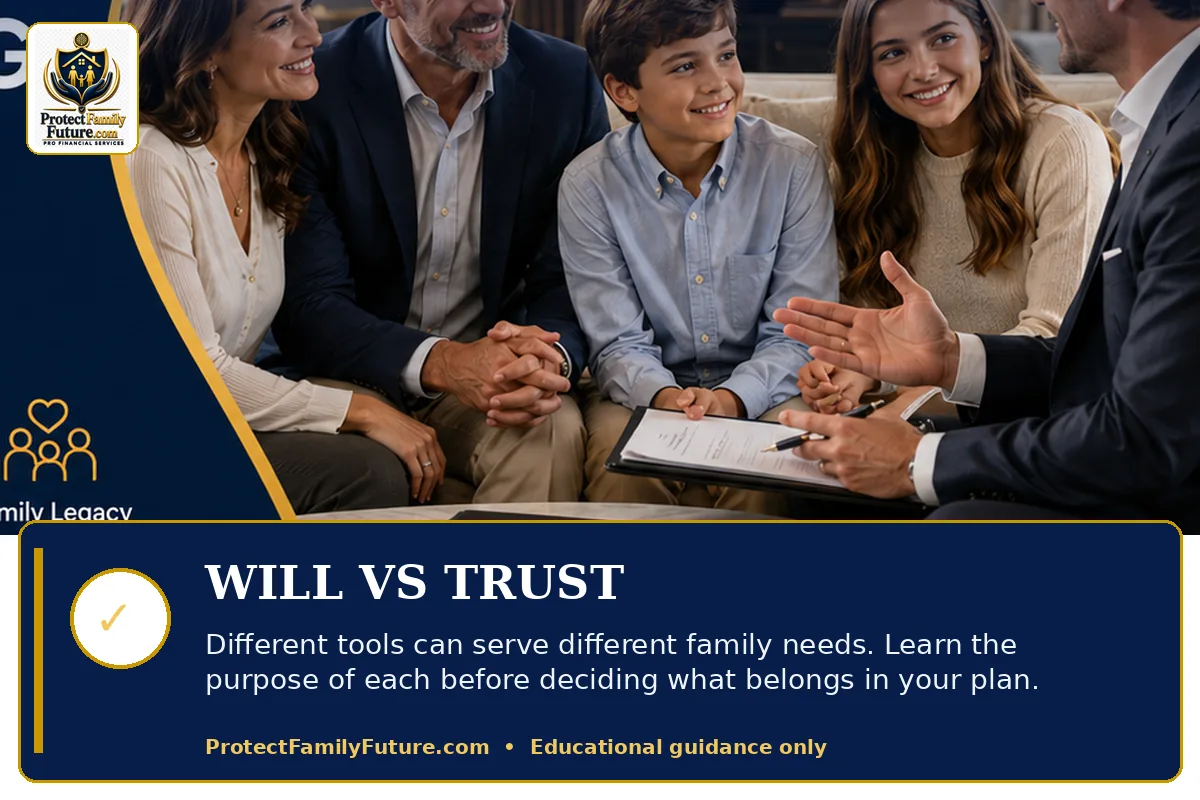
A will and a trust are not the same. Families should understand the basic difference before deciding what legal documents may be appropriate.

Families with children should discuss who may care for them, who may manage money, and how the family wants important responsibilities handled.
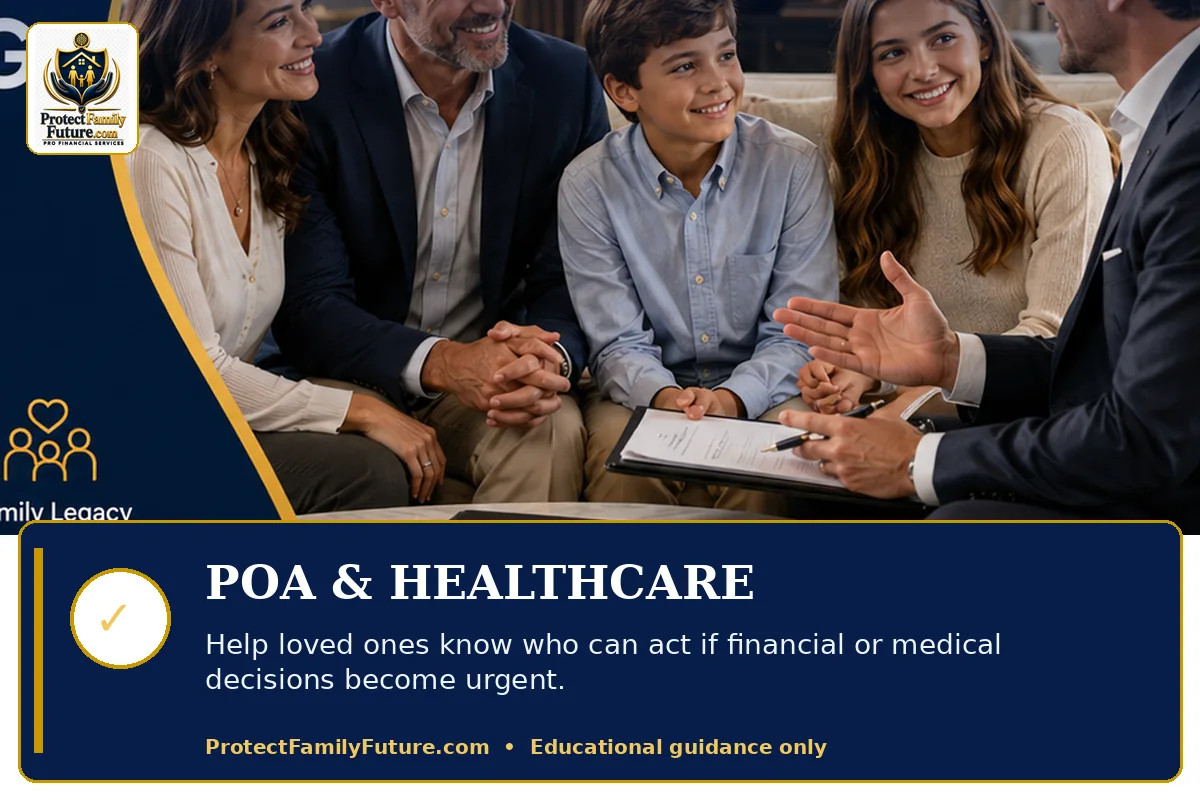
Families should understand documents that may help trusted people act during incapacity, illness, or important medical and financial situations.

Life insurance, retirement accounts, bank accounts, and investment accounts may pass by beneficiary designation. These should be reviewed with your overall estate plan.
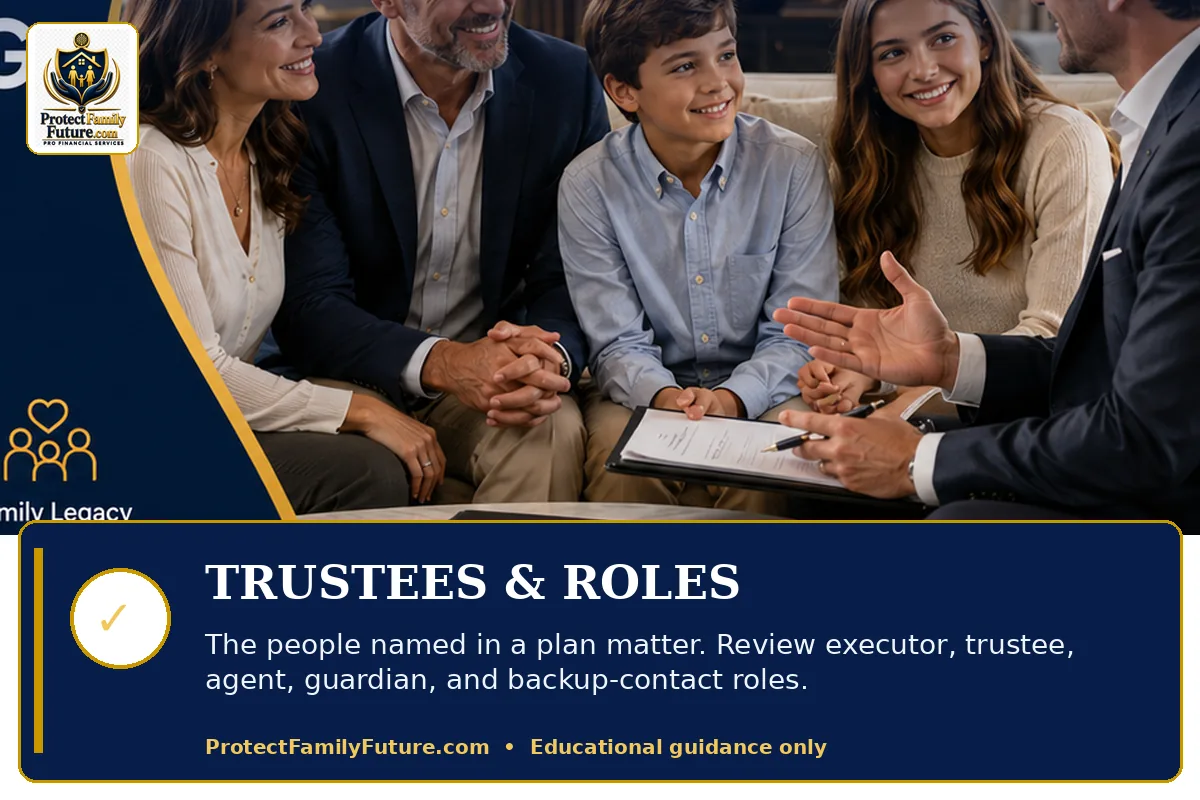
Families should think carefully about who may manage assets, communicate with family, handle paperwork, and follow instructions.

Good planning includes organizing account lists, insurance policies, passwords, digital assets, titles, documents, and important contact information.
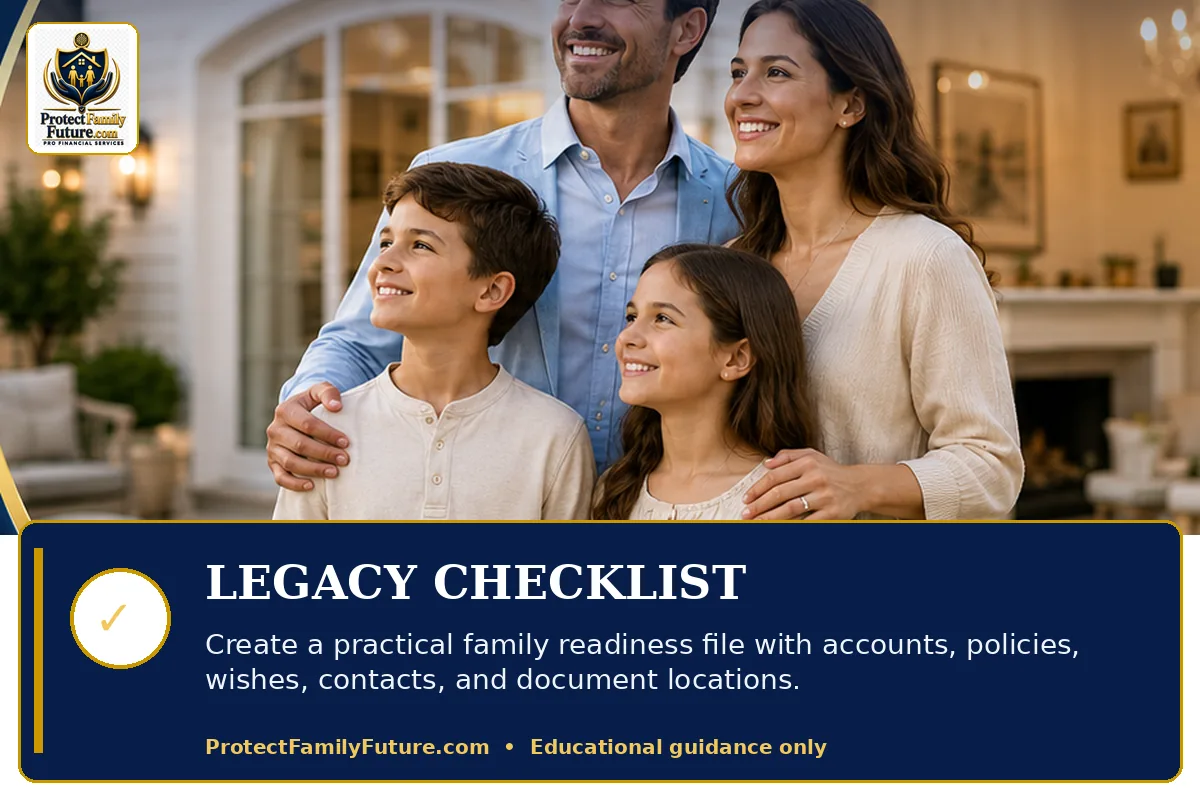
A checklist helps families gather the right information before speaking with legal, tax, insurance, or financial professionals.
Will, trust, probate, homestead, community property, power of attorney, guardianship, and healthcare directive rules can vary by state.
Start with a simple planning conversation. We help you organize topics to discuss with qualified legal, tax, and financial professionals.
Share your details and we will help you choose the right education starting point for your family legacy planning questions.
Protect your family with clarity, care, and a plan they can follow.

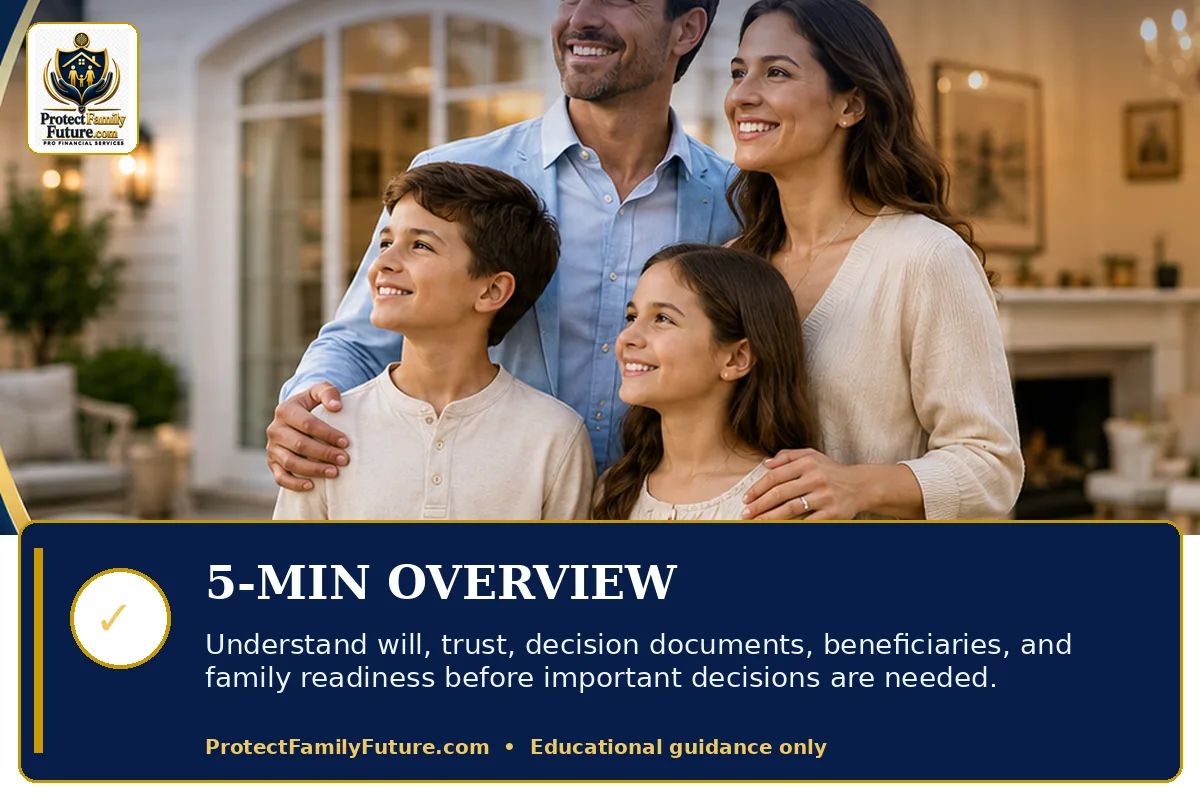
This quick education path helps families understand the most important will, trust, decision-document, beneficiary, and legacy-organizer topics before they meet with qualified professionals.
A will, living trust, living will, and beneficiary designation can each play a different role. The goal is to understand the purpose of each tool before deciding what belongs in your family plan.
Parents may need to organize who should be contacted, who may care for minor children, what family values should be considered, and where important child-related information is stored.
Financial powers of attorney, healthcare directives, and related decision documents can help families understand who may assist with financial or medical choices when someone cannot act or speak clearly.
Retirement accounts, life policies, bank accounts, investment accounts, and transfer-on-death designations may need review so they align with the broader family plan.
Families should think carefully about who may serve as executor, trustee, financial agent, healthcare agent, guardian, or backup contact, and whether each person understands the responsibility.
Homes, rental property, business interests, online accounts, passwords, cloud storage, domains, subscriptions, and digital records should be organized so loved ones can locate what matters.
A legacy organizer is a practical family readiness file. It helps collect the people, documents, accounts, policies, passwords, wishes, and professional contacts loved ones may need.
Families in Texas communities such as Frisco, Plano, Prosper, McKinney, Dallas, and surrounding areas may benefit from education that helps them prepare more focused questions for qualified local professionals.
Start with a simple conversation. We help you identify what to organize, which questions to ask, and where qualified legal, tax, or financial professionals may be needed.
Share your details and we will help you choose the right Will & Trust education starting point.
A will, trust, beneficiary review, healthcare directive, power of attorney, and family organizer can help loved ones avoid confusion when life changes suddenly. Understand the common issues families may face with a home, mortgage, children, debts, beneficiaries, healthcare decisions, and family responsibilities when no clear plan exists.
When someone passes away without a valid will, trust, beneficiary review, or organized family instructions, the family may need to follow court procedures and state default rules.
If a home still has a mortgage, loved ones may need to identify who has legal authority, how payments will continue, who can speak with the mortgage company, and whether the home will be kept, sold, refinanced, or transferred.
A paid-off home can still create challenges if ownership, title, heirs, property taxes, insurance, maintenance, and transfer instructions are not clearly organized.
In many situations, valid debts are handled by the estate before remaining assets are distributed. Family members may not personally owe the debt unless they shared responsibility, co-signed, held a joint account, or state law creates responsibility.
If parents pass away or become unable to care for minor children, a court may need to decide who should raise the children and who should manage money left for them.
A family may include a spouse, children from a prior relationship, stepchildren, unmarried partners, aging parents, siblings, or other loved ones. Without clear planning, state default rules may not match the family’s real wishes.
Retirement accounts, life insurance policies, annuities, bank accounts, and investment accounts may use beneficiary forms or account ownership rules. If those records are missing or outdated, the result may surprise the family.
A serious accident, stroke, illness, surgery, or cognitive decline may create urgent questions before death. Family members may need legal authority to help with healthcare, banking, bills, insurance, and daily responsibilities.
Business ownership, online accounts, passwords, domains, cloud files, subscriptions, social media, crypto records, and digital storage can become difficult to access if no trusted person knows what exists or where to find it.
When no one knows the wishes, documents, accounts, passwords, debts, advisors, or first step, family members may face stress, conflict, delay, and avoidable pressure.
Share your details and we will help you understand which family readiness topics may need attention.
Life is unpredictable. Thoughtful planning today can help ensure your loved ones are cared for, your assets are organized, and your wishes are understood.

Help provide for your loved ones and make your intentions easier to understand.

Clear instructions can help reduce family stress, delays, and unnecessary disagreements.

Proper planning may help reduce avoidable delays, duplicated effort, and added costs.

Leave behind clarity, values, and guidance for the people who matter most.
Key areas of legacy planning that can bring greater peace of mind.








We learn about your family, assets, and important relationships.
We discuss your wishes and what matters most to you.
We help identify areas that may need attention or updates.
If legal documents are needed, we encourage qualified attorney review.
Life changes. We help you remember to review your plan over time.




Book your free educational discovery call today and take the first step toward greater clarity, organization, and peace of mind.



Learn how a clear family readiness plan can help protect loved ones, organize important decisions, and reduce confusion around homes, children, debts, accounts, beneficiaries, healthcare wishes, and legacy instructions.
Join our free weekly educational webinar to understand what families should know about wills, trusts, beneficiaries, healthcare decisions, debts, home ownership, and legacy organization.
Let’s talk about your family goals and help you identify the right starting point.
Life is unpredictable. Proper planning today can help ensure your loved ones are cared for, your assets are protected, and your wishes are honored.


Key areas of legacy planning that can bring peace of mind.




Parents with minor children
Homeowners
Married couples
Business owners
Families with aging parents
Those with life coverage
Anyone who wants to reduce confusion for loved ones
We learn about your family, assets, and important relationships.
We discuss your wishes and what matters most to you.
We help identify areas that may need attention or updates.
If legal documents are needed, we connect you with qualified attorneys.
Life changes. We help you review and update your plan over time.

Book your free educational discovery call today and take the first step toward peace of mind.
Your information is always kept private.
This is an educational conversation, not a sales call.

Get clarity on your options and next steps.
We respect your privacy. Your information is safe with us.

ProtectFamilyFuture.com is an education-first financial services platform designed to help families make more confident decisions about protection planning, retirement awareness, living benefits, child future planning, legacy planning, and financial education.
We also help motivated professionals explore a flexible business opportunity through training, mentorship, leadership development, weekly webinars, and a builder-focused support system.
Educational information only. Product availability, benefits, eligibility, and results vary by carrier, policy, state, and individual situation.
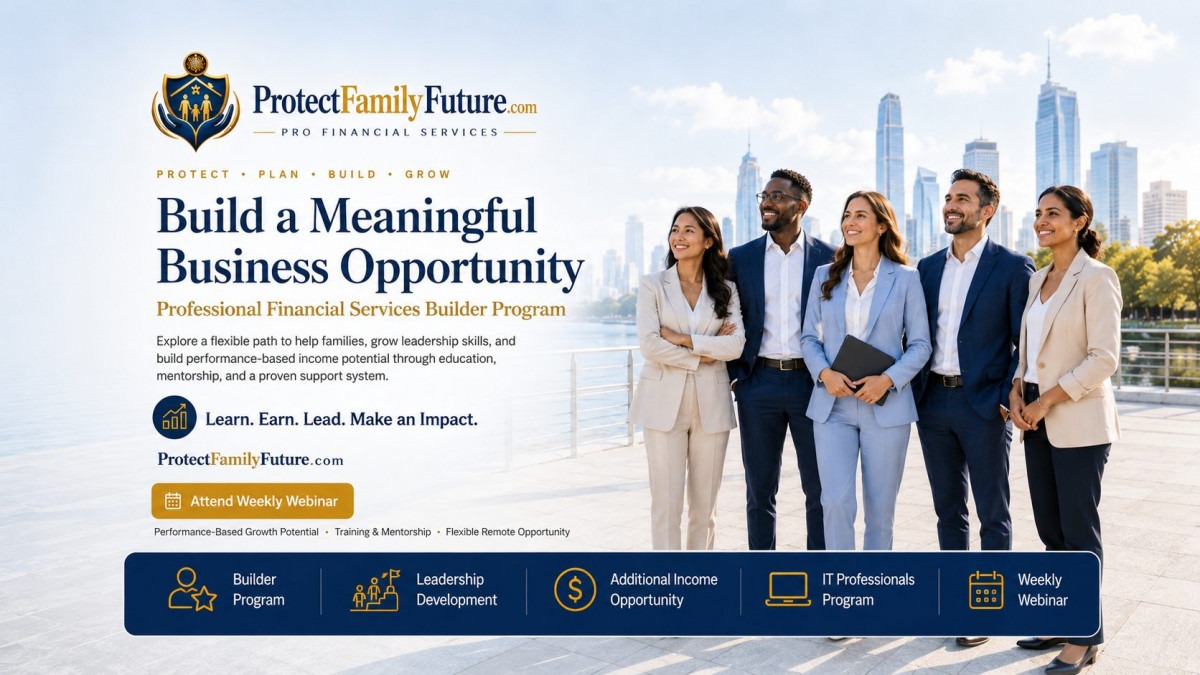
ProtectFamilyFuture.com offers a builder-focused business opportunity for motivated professionals who want to learn, grow, and make an impact while helping families understand financial education, family protection, retirement awareness, living benefits, and legacy planning concepts.
Our Business Opportunity Center is designed for people who want a flexible, mentorship-driven path with training, leadership development, weekly business opportunity webinars, IT professionals support, builder resources, and a community focused on education-first service.
Disclaimer: Educational information only. Business and income results are not guaranteed. Results depend on individual effort, licensing where required, training, consistency, mentorship, and market conditions. Please consult qualified professionals for advice specific to your situation. Learn. Earn. Lead. Make an Impact.
Protect • Plan • Build • Grow
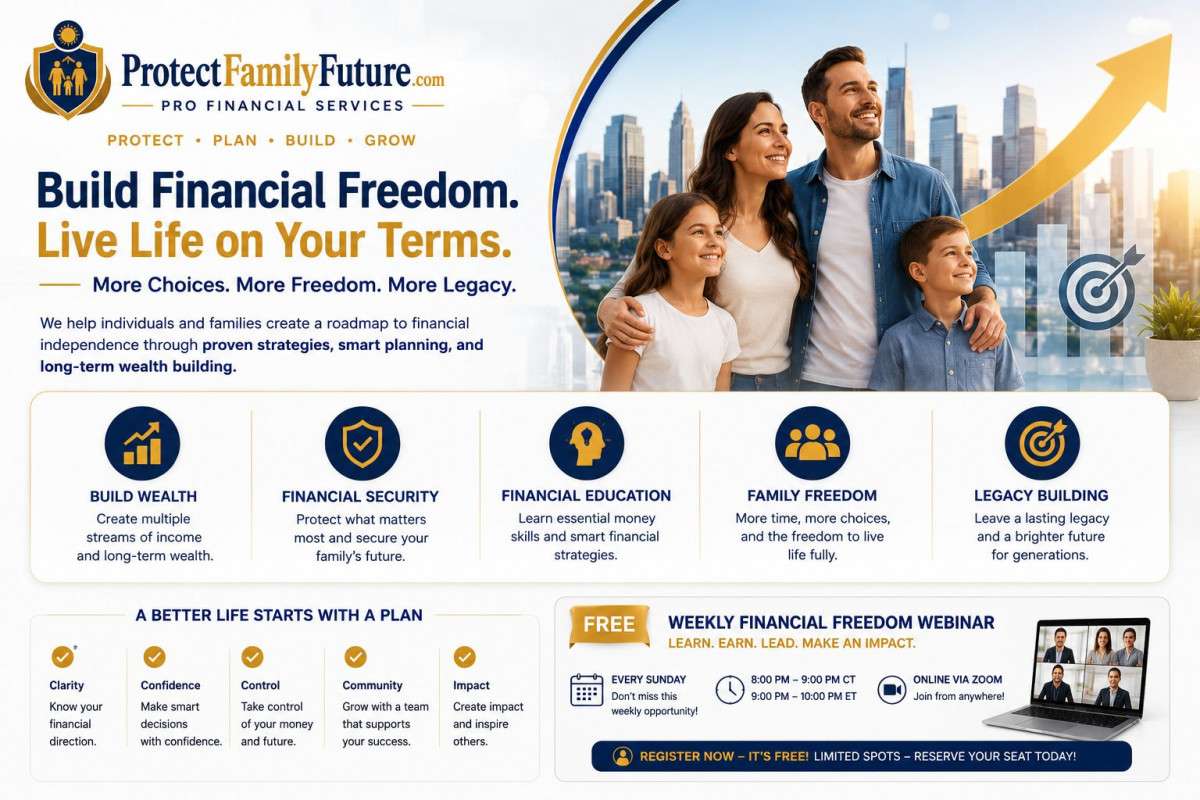
Explore education-first family protection planning designed to help families prepare for income protection, mortgage protection, final expenses, and long-term family security.
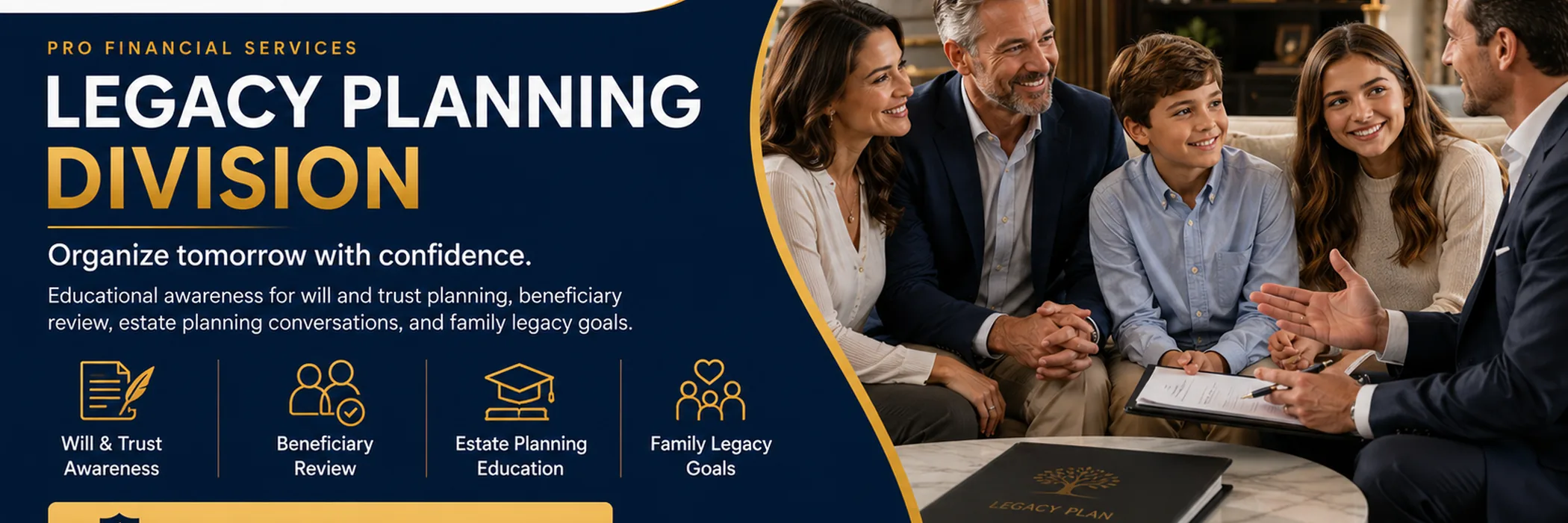
Learn how will and trust planning, estate planning, beneficiary preparation, and family asset protection conversations can help loved ones move forward with clarity.

Explore child future planning concepts designed to help families understand long-term growth potential, early planning, family protection, and legacy-building strategies.
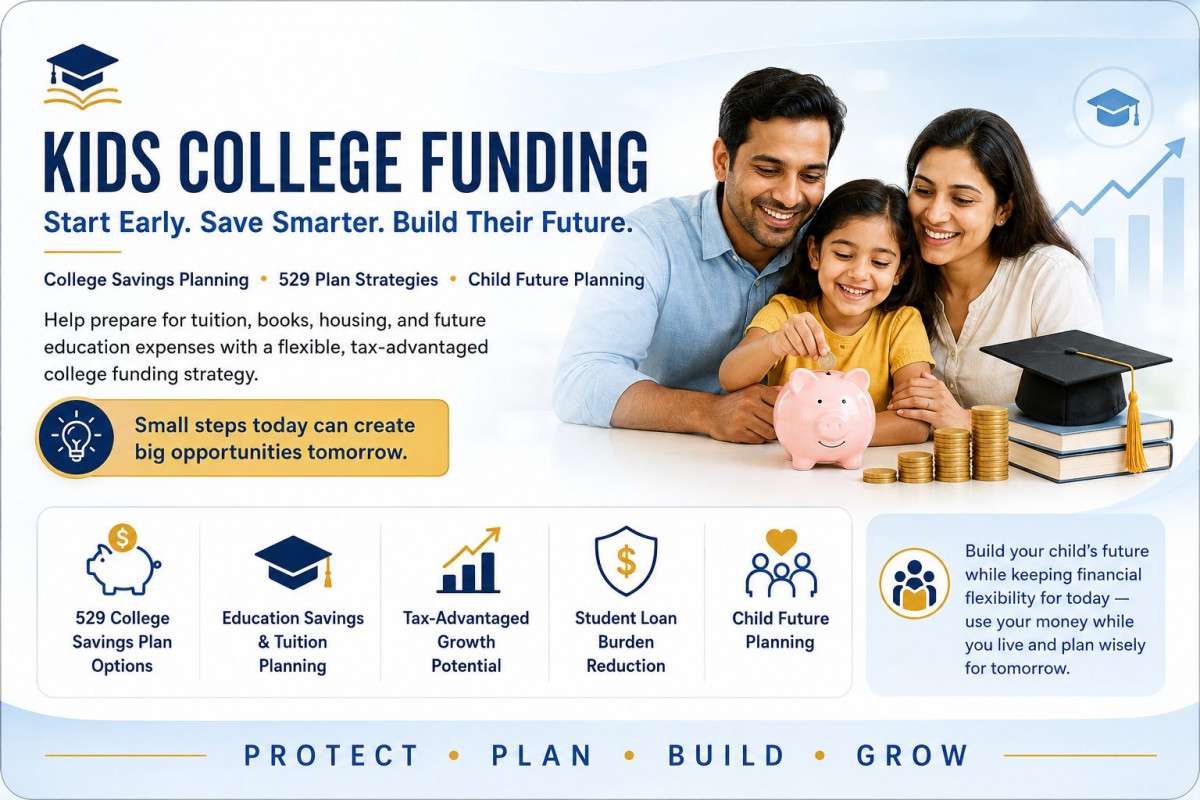
Explore college savings planning, 529 plan education, education savings strategies, student loan burden awareness, and child future planning for families.

Living benefits education helps families understand how some protection strategies may provide access to benefits while still living during qualifying health events.

Explore tax-efficient growth, tax-advantaged income, retirement income planning, and legacy planning strategies designed to help families make smarter long-term decisions.
Start with a simple educational conversation. We’ll help you understand your goals and guide you toward the right financial education topic or next step.
Share your details and we’ll help you choose the right starting point.
Earn • Lead • Impact • Freedom

Explore a flexible business opportunity designed for people who want to help families, grow leadership skills, and build a meaningful professional path through financial education.

Designed for motivated professionals looking for additional income potential while helping families understand protection planning, retirement awareness, and legacy planning concepts.
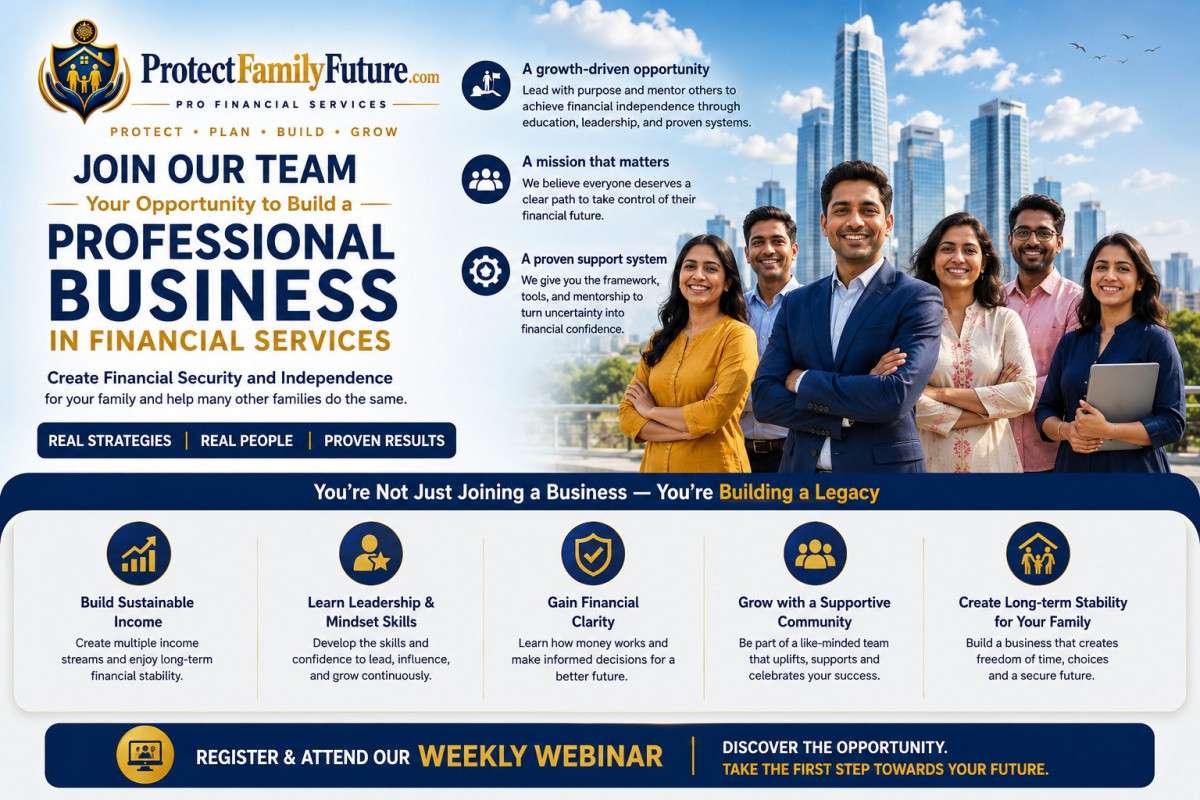
IT professionals, cloud professionals, data professionals, project managers, and consultants can use their communication, problem-solving, and system-building strengths.
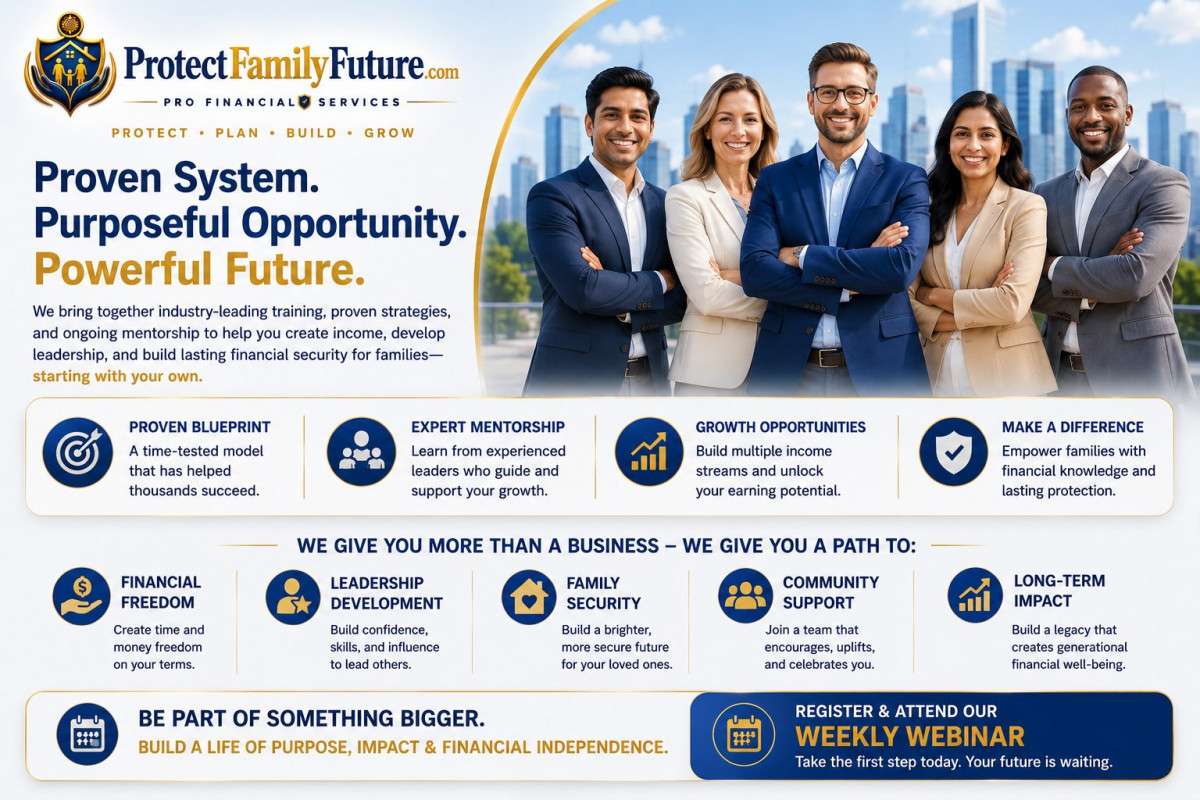
The Builder Program helps motivated people learn financial education outreach, family protection conversations, business opportunity sharing, and team growth.
Leadership development focuses on communication, consistency, team building, mentorship, weekly accountability, and helping others grow through a proven support system.
Builder resources help new and growing team members stay organized with simple systems for outreach, education, discovery calls, weekly webinars, and follow-up.
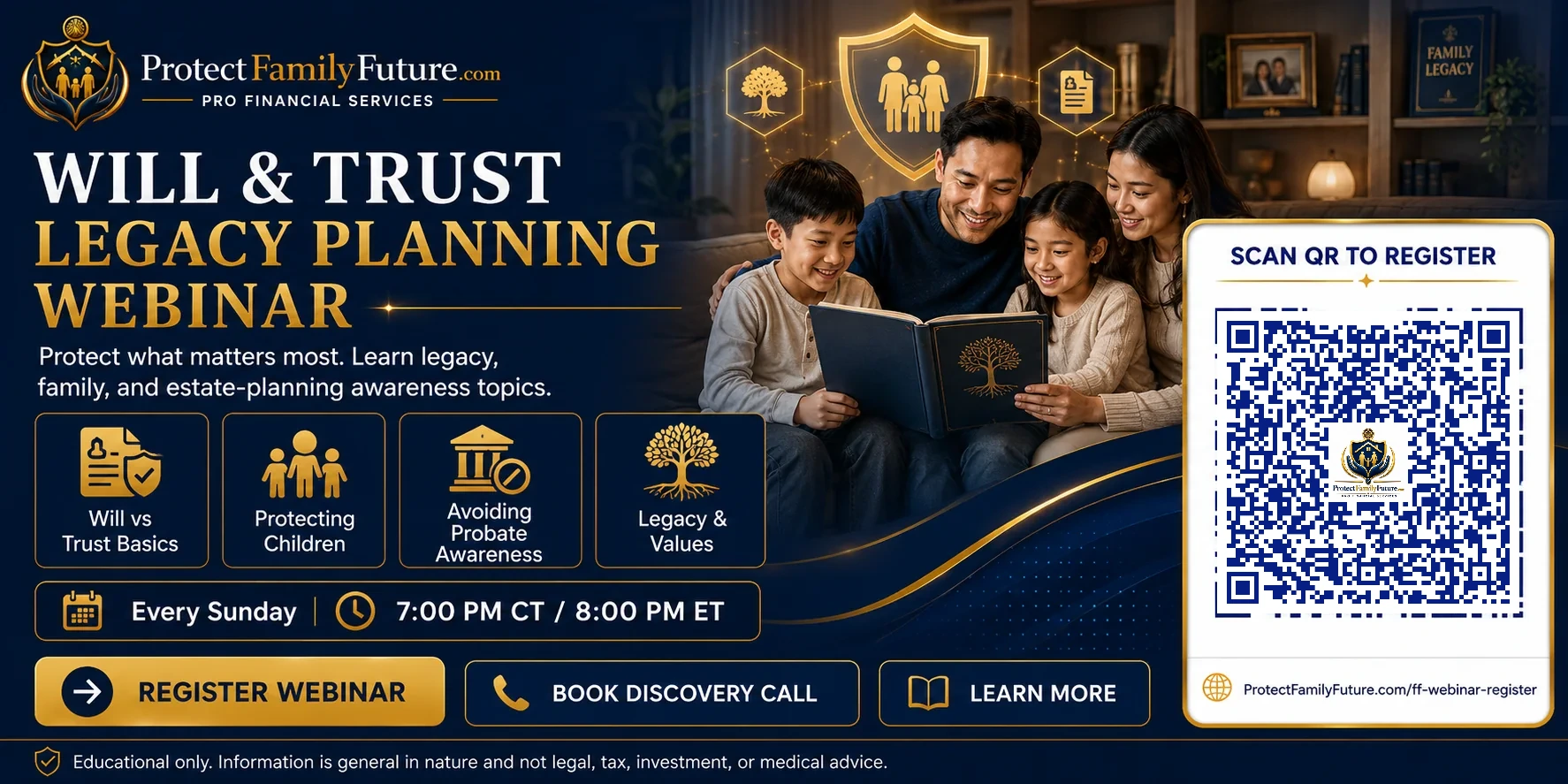
Join a consumer-focused educational session covering family protection, living benefits, retirement income, rollover education, tax-aware retirement, child-future planning, and will, trust & legacy awareness.
Start with a private discovery call. We’ll learn about your goals, current profession, availability, interest level, and whether the builder program may be a good fit.
Send your details and we’ll help you choose the right next step.





Help protect your loved ones from life’s unexpected events with customized solutions.
Learn More
Create reliable income for retirement and enjoy the lifestyle you’ve worked for.
Learn More
Access benefits while you’re living and protect your wealth and health.
Learn More
Build a brighter future for your children with smart education and financial planning.
Learn MoreTop recommended education areas for complete family 360° protection.
Explore essential education areas for family protection, children’s future planning, living benefits, health challenges, retirement strategies, and will & trust legacy planning..

Discover how family protection planning can help create confidence today and tomorrow.
LEARN MORE
Learn how early planning may help build a stronger foundation for a child’s future.
LEARN MORE
Explore education funding ideas designed to support children’s dreams and opportunities.
LEARN MORE
Help protect your wishes, loved ones, and legacy for future generations.
LEARN MORE
Learn how living benefits may help provide support while you are living, not only after death.
LEARN MORE
Explore planning options that may help during qualifying health events.
LEARN MORE
Explore tax-aware retirement strategies designed to help protect long-term income.
LEARN MORE
Review rollover, retirement income, and protection strategies for long-term security.
LEARN MOREExplore our education-first pathways for family protection, business opportunity, leadership development & community impact.

Protect what matters most.
Explore strategies designed to help safeguard your family’s future and create long-term confidence.
Learn More →
Earn. Lead. Impact. Freedom.
Create additional income and build a purpose-driven path while helping families.
Explore Opportunity →
Develop. Grow. Succeed.
Build leadership skills, unlock your potential, and create lasting impact.
Join Leadership Academy →
Serve. Educate. Empower.
Build stronger communities today while helping families prepare for a better tomorrow.
Make an Impact →
Join a consumer-focused educational session covering family protection, living benefits, retirement income, rollover education, tax-aware retirement, child-future planning, and will, trust & legacy awareness.
Send your details and we’ll help you choose the right next step.