
Living benefits planning education
Living benefits planning consultation
Critical illness benefit awareness
Family protection and living benefits next step
Living Benefits Planning Education

UNDERSTAND LIVING BENEFITS PLANNING IN 5 MINUTES

Learn how certain policy features may help during qualifying health events while protecting long-term family goals.
Living Benefits Planning Overview - ProtectFamilyFuture.com
Living Benefits Education

Understand Living Benefits Planning in 5 Minutes

Protection that may help during life, not only after death.

Living benefits education helps families understand how certain life insurance policy features may provide access to benefits during qualifying health events, while keeping long-term family protection goals in mind.

  • Understand the difference between traditional death-benefit protection and living benefit features
  • Learn how accelerated benefit riders may work during qualifying serious health events
  • Review how using benefits may reduce remaining protection for beneficiaries
  • Connect health-event planning with income, mortgage, and family responsibilities
  • Prepare better questions before selecting or updating coverage
What Are Living Benefits - ProtectFamilyFuture.com
Core Concept

What Are Living Benefits?

Some policies may include features that can help while living.

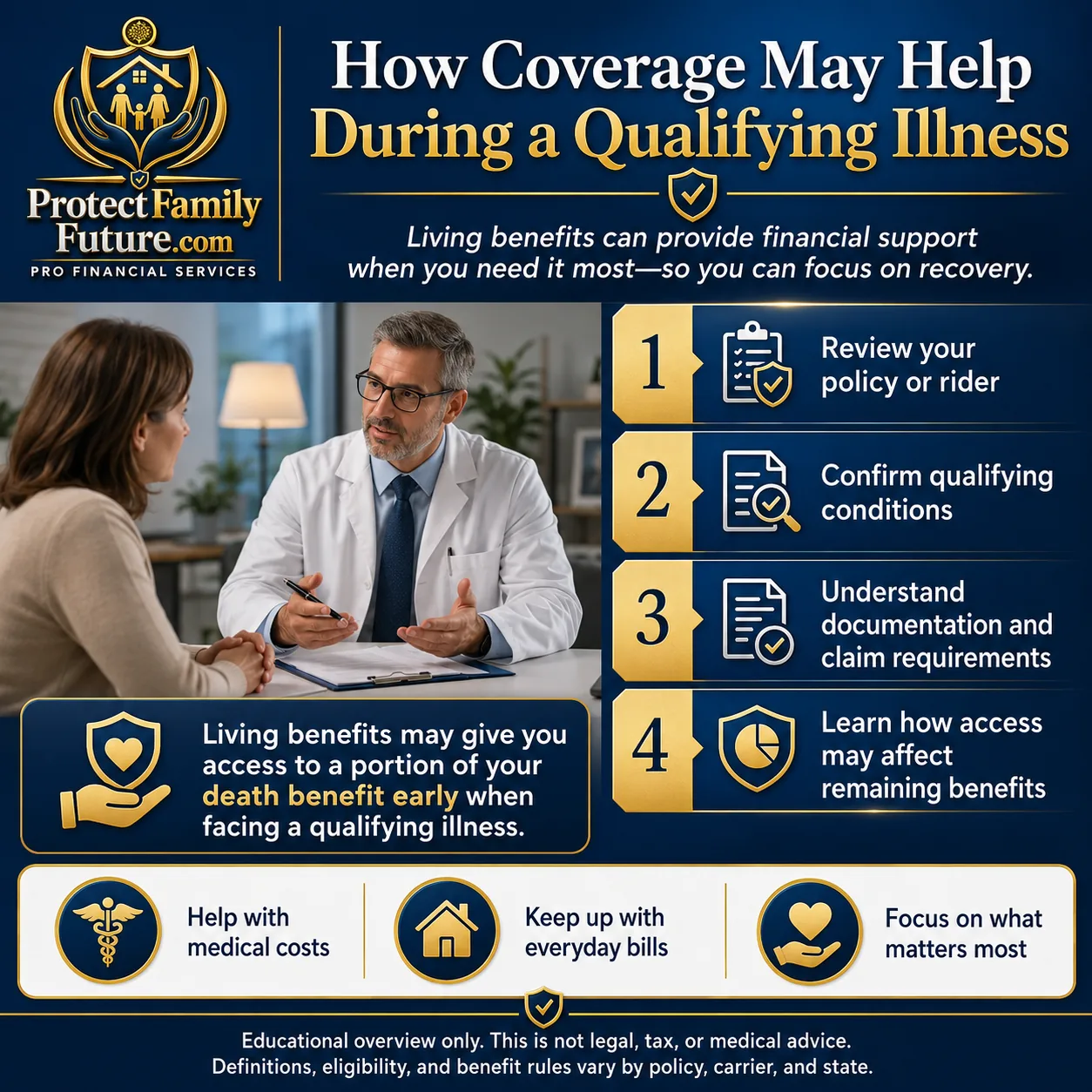
Living benefits are policy features or riders that may allow access to a portion of benefits during certain qualifying health situations. Details depend on the policy, rider language, carrier, state availability, underwriting, and claim rules.
  • May include accelerated benefit riders connected to qualifying illness or condition
  • May apply differently for term, permanent, indexed, or other policy types
  • Can require medical certification, claim review, and policy-specific documentation
  • May reduce the remaining death benefit or other policy values
  • Should be reviewed carefully before assuming all policies work the same way
Critical Illness Living Benefits Education - ProtectFamilyFuture.com
Health Event Awareness

Critical Illness Benefit Awareness

A serious diagnosis can create both medical and financial pressure.

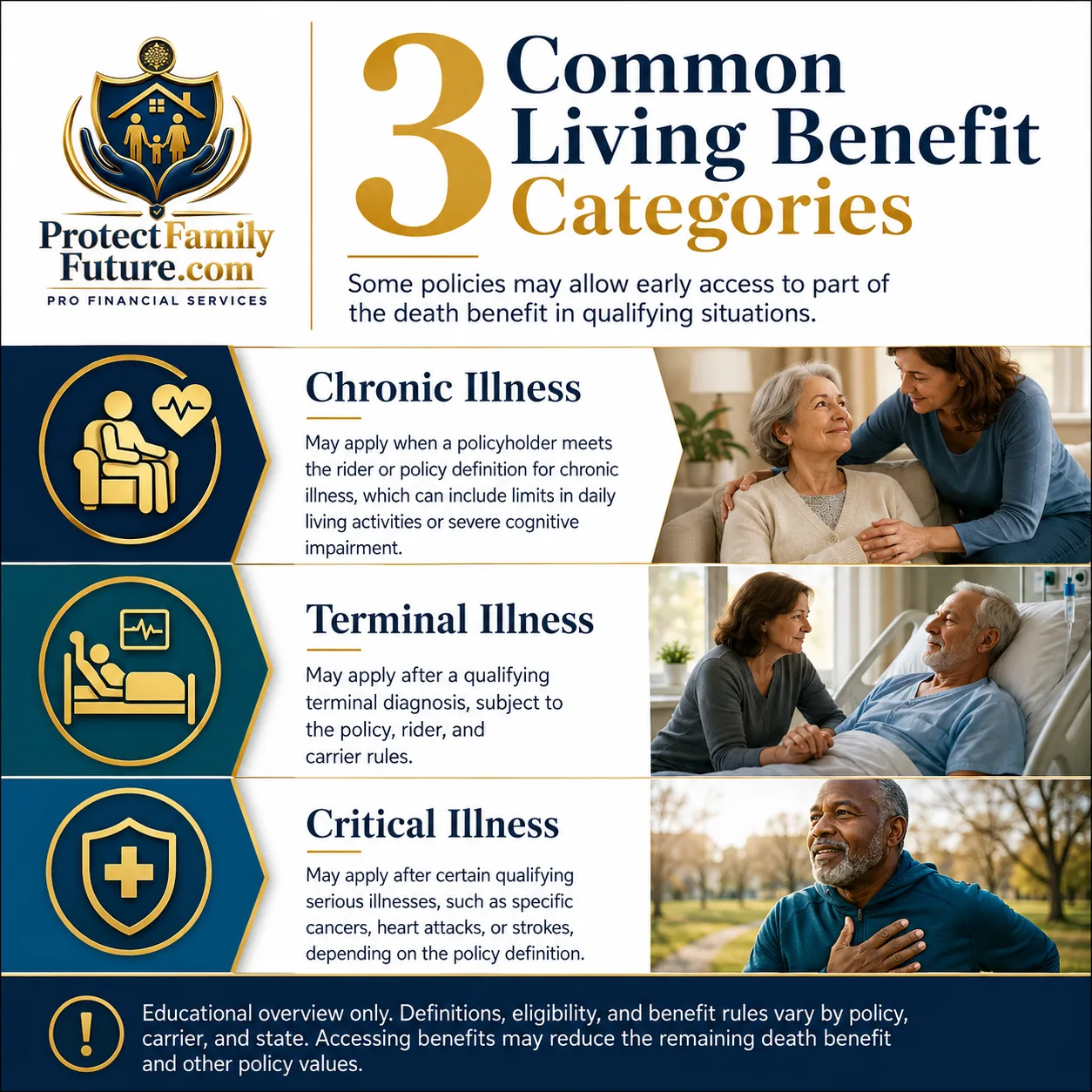
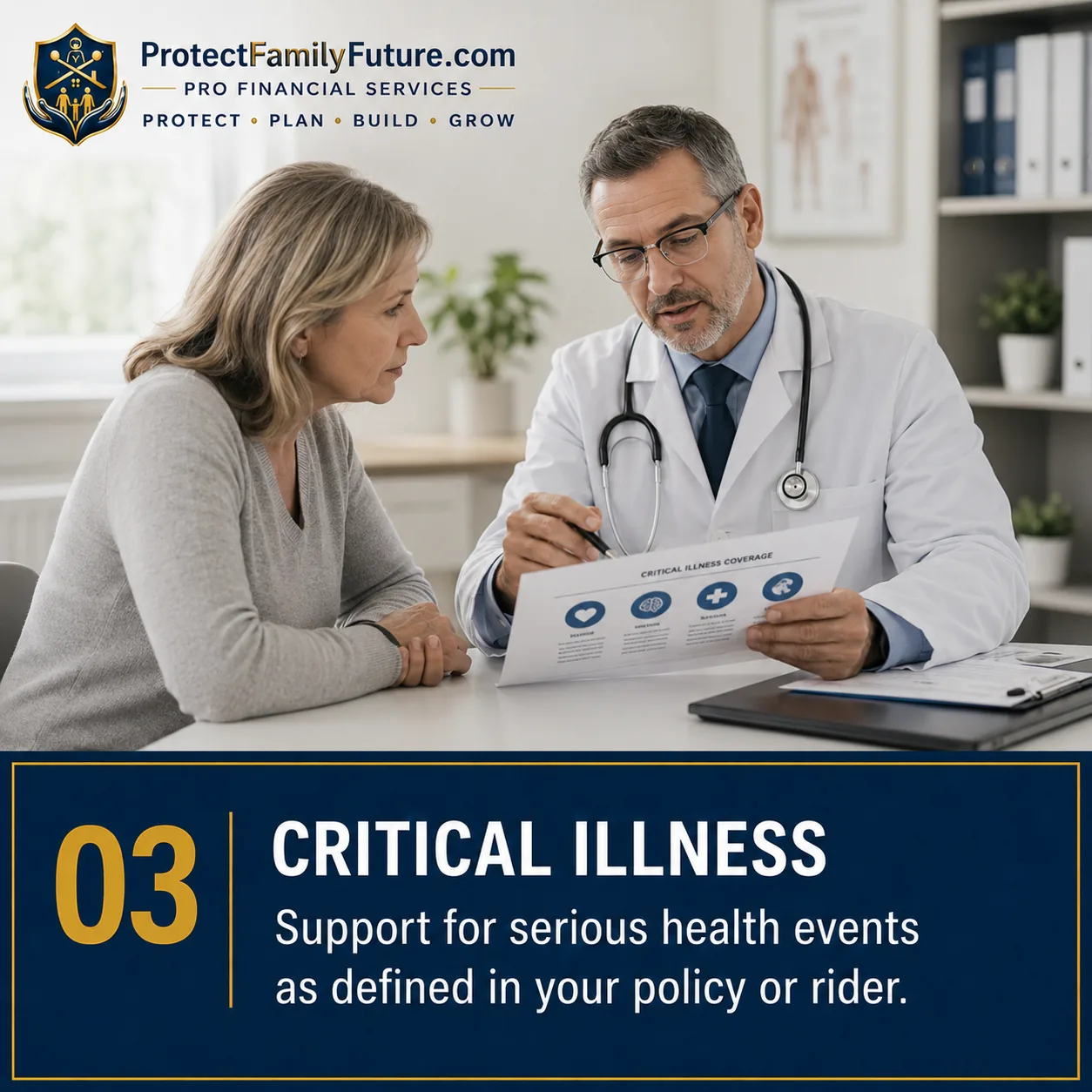
Critical illness benefit provisions may be designed around specific qualifying events listed in the policy or rider. Families should understand what may qualify, what may be excluded, and how benefit access may affect the rest of the policy.

  • Review whether events such as heart attack, stroke, cancer, or organ-related conditions are addressed by the rider language
  • Understand that qualifying conditions and definitions can vary by carrier and policy
  • Ask how much benefit may be available during a qualifying event
  • Review whether charges, reductions, or claim limits may apply
  • Compare policy language before assuming one policy matches another
Chronic Illness Living Benefits Education - ProtectFamilyFuture.com
Care Planning Focus

Chronic Illness Benefit Awareness

Long-term health limitations can affect the entire family plan.

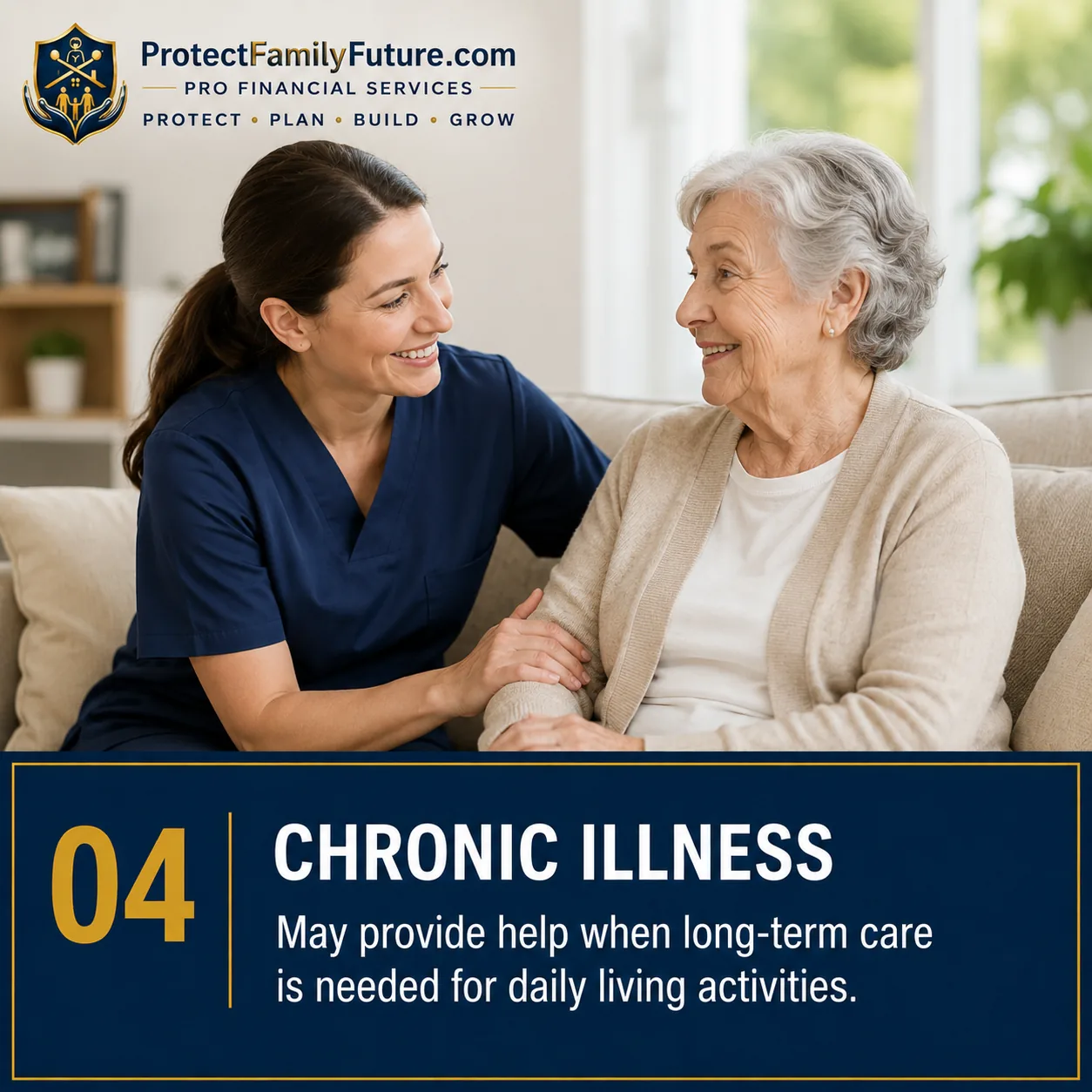
Chronic illness benefits may involve specific definitions, certification requirements, and benefit-access rules. Families should understand how chronic illness riders differ from critical illness riders, terminal illness riders, disability coverage, and long-term care insurance.

  • Review how the policy defines chronic illness or severe functional limitation
  • Ask whether temporary or permanent conditions are addressed
  • Understand whether activities-of-daily-living or cognitive impairment rules may apply
  • Review how benefit access may be calculated and what may be reduced
  • Coordinate coverage with retirement income, caregiving, and family support planning
Terminal Illness Living Benefits Education - ProtectFamilyFuture.com
Serious Illness Planning

Terminal Illness Benefit Awareness

Families should know what options may exist before crisis strikes.

Some policies may allow access to a portion of benefits when a qualifying terminal illness diagnosis is certified. The life-expectancy requirement, benefit amount, waiting period, fees, and remaining protection can vary by policy and carrier.

  • Understand what diagnosis or life-expectancy requirement may apply
  • Ask how much of the benefit may be accelerated
  • Review whether fees, interest, or reductions may apply
  • Confirm what may remain for beneficiaries after any benefit access
  • Keep policy records organized so loved ones know where to start
Bills Income and Living Benefits Planning - ProtectFamilyFuture.com
Financial Pressure

Bills, Income, and Family Cash Flow

A health event can affect more than medical costs.

When a major health event happens, families may face medical costs, travel needs, income disruption, caregiving expenses, mortgage payments, debt pressure, and everyday household obligations.

  • Review income-disruption exposure if work stops or hours are reduced
  • Identify mortgage, rent, utilities, debt, and emergency expense pressure
  • Organize health coverage, life coverage, emergency savings, and family contacts
  • Understand how living benefits may or may not be available for a specific claim
  • Build a practical household protection checklist before an emergency happens
Living Benefits and Family Protection Planning - ProtectFamilyFuture.com
Family Protection Fit

How Living Benefits Fit Family Protection

Protection planning should consider both life and serious health events.

Living benefits education can be part of a broader family protection plan that reviews income needs, mortgage exposure, children’s future, retirement goals, caregiving responsibilities, and beneficiary protection.

  • Connect coverage to family responsibilities, not just policy numbers
  • Review income replacement, mortgage protection, and household obligations
  • Understand protection needs for parents, homeowners, business owners, and caregivers
  • Coordinate beneficiary designations with family readiness documents
  • Ask whether existing coverage still fits today’s family situation
Living Benefits Policy Review Checklist - ProtectFamilyFuture.com
Policy Review

Living Benefits Policy Review Checklist

Existing coverage may not always match current family needs.

A policy review can help families understand what they own, which riders are included or optional, what changed since the policy was issued, and whether the plan still supports today’s goals.

  • Review policy type, face amount, premium, riders, ownership, and beneficiaries
  • Check whether living benefit riders are included, optional, unavailable, or require added cost
  • Review limits, exclusions, waiting periods, claim requirements, and reductions
  • Separate living benefits from cash value, policy loans, surrender value, life settlements, and viatical settlements
  • Compare current protection against income, debt, family, and retirement responsibilities
Questions to Ask About Living Benefits - ProtectFamilyFuture.com
Smart Questions

Questions Families Should Ask

Good decisions start with clear questions.

Before selecting or updating coverage, families should understand what is included, what is optional, what conditions may qualify, how claims are reviewed, and how using benefits may affect future protection.

  • Which living benefit riders are included, available, or excluded?
  • What events may qualify under the exact policy language?
  • How much benefit may be accessed during life, and when?
  • How does acceleration affect the remaining death benefit or policy values?
  • What documentation, certification, claim review, fees, or tax questions should be considered?
Book Your Living Benefits Planning Review - ProtectFamilyFuture.com
Private Discovery Call

Book Your Living Benefits Readiness Call

Educational. Private. Organized. No pressure.

Start with a simple conversation. We help you review your family situation, understand living benefits concepts, identify policy questions, and choose the next education step.

  • Review your family protection priorities
  • Identify health-event, income-disruption, mortgage, and caregiving concerns
  • Understand key rider, policy-review, and beneficiary questions
  • Organize existing coverage before making any changes
  • Take the next clear step with confidence and better information

Get Your Complimentary Protection Review

Share your details and we will help you choose the right Living Benefits education starting point.

PFF Master Lead Form
Educational • Private • Organized • No pressure
Living Benefits Education
Health Event Awareness
Bills & Income Planning
Family Protection
Discovery Call
Educational Note: This section provides general family protection and living benefits education only. Living benefits, accelerated benefit riders, chronic illness riders, critical illness riders, terminal illness riders, long-term care-related provisions, waiver provisions, eligibility rules, charges, exclusions, benefit reductions, claim requirements, underwriting, tax treatment, and availability can vary by state, carrier, policy type, rider language, and individual situation. Accessing benefits during life may reduce the policy’s death benefit, cash value, loan value, or other policy values. Cash value, policy loans, surrender value, life settlements, and viatical settlements are separate concepts and should be reviewed carefully before any decision is made. This information is not legal, tax, investment, insurance, medical, or financial advice and does not create any guarantee of eligibility, coverage, benefit access, or claim approval. Final decisions should be reviewed with qualified professionals authorized in your state.
Living Benefits Risk Education

5-MIN QUICK VIEW EDUCATION: WHAT MAY HAPPEN WITHOUT A LIVING BENEFITS PLAN?

A serious illness or health event can create medical, income, mortgage, caregiving, and family pressure. Learn what families may face when their life insurance has no living benefit features, the features are unclear, or the policy has never been reviewed.
What may happen without a living benefits plan
No Living Benefits Review - Big Picture

What May Happen Without a Living Benefits Plan?

Your policy may protect the family after death, but may not clearly help during a serious illness.

Many families buy life insurance for loved ones, then never review whether the policy includes living benefit features, accelerated benefit riders, chronic illness options, critical illness options, or terminal illness provisions.

  • The family may not know whether any benefits can be accessed during life
  • Older policies may not include newer rider features or may have limited language
  • Health events may create income pressure before a death benefit is ever paid
  • Benefit access may be delayed if policy details and documents are not organized
  • A review can help separate real policy features from assumptions
Health event pressure and financial planning
Health Event Before Death

A Serious Health Event Can Affect the Family Before Death

The financial pressure may begin while the person is still living.

A stroke, heart condition, cancer diagnosis, major surgery, chronic illness, accident, or serious medical event can disrupt income, caregiving, transportation, work schedules, and household responsibilities.

  • Income may slow down or stop while expenses continue
  • A spouse or adult child may reduce work hours to provide care
  • Medical, travel, home-care, and household costs may increase
  • Mortgage, rent, utilities, and debt payments may still need attention
  • Without a clear policy review, the family may not know what options exist
Critical illness living benefits education
Critical Illness Gap

What May Happen if a Critical Illness Rider Is Missing or Unclear?

Not every serious diagnosis automatically qualifies for benefit access.

Critical illness riders may address certain qualifying conditions, but the exact conditions, definitions, waiting periods, exclusions, claim process, and available benefit amount can vary.
  • The family may assume coverage applies when the policy language says otherwise
  • Different carriers may define qualifying events differently
  • Benefit access may require medical proof and claim approval
  • Some policies may not include critical illness benefits at all
  • Using an accelerated benefit may reduce the benefit left for beneficiaries
Chronic illness care planning gap
Chronic Care Gap

What May Happen During a Long-Term Chronic Illness?

Care needs can continue for months or years, and family resources may be stretched.

Chronic illness planning is different from a one-time emergency. The family may need help with daily activities, home modifications, transportation, supervision, caregiver schedules, and long-term financial decisions.

  • The family may not know if the policy includes a chronic illness rider
  • Eligibility may depend on specific functional or cognitive limitations
  • Caregiving may affect a spouse, children, or aging parents
  • Long-term care insurance and chronic illness riders are not the same thing
  • Reviewing the policy early can help families understand the difference
Terminal illness planning and family choices
Terminal Illness Choices

What May Happen if Terminal Illness Benefits Are Not Understood?

The family may face urgent choices without knowing what the policy allows.

Some policies may include a terminal illness or accelerated death benefit provision. However, life-expectancy rules, benefit limits, waiting periods, administrative charges, and remaining death benefit treatment can vary.

  • The family may not know whether a terminal illness rider exists
  • The policy may require a specific life-expectancy certification
  • Benefit limits may be lower than the full policy value
  • Timing matters because claim review may take documentation
  • Remaining benefits for beneficiaries should be reviewed before any decision
Bills income and family protection planning
Bills and Income Stress

What May Happen to Bills, Mortgage, and Income?

A serious illness can affect the household budget immediately.

Even with health insurance, families may still face deductibles, travel, missed work, caregiver costs, mortgage payments, rent, utilities, debt, groceries, and other daily obligations.
  • Medical insurance may not solve all income-disruption problems
  • Household bills may continue while work income is reduced
  • Caregiving can create new costs and lost time
  • Emergency savings may be used faster than expected
  • A living benefits review can help families understand possible policy options
Traditional life insurance versus living benefits education
Traditional Policy Only

What May Happen if a Policy Only Pays After Death?

The family may have protection later, but no clear support during a qualifying illness.

Traditional life insurance is designed primarily to help beneficiaries after death. Living benefit features, when available and approved, may offer an additional layer of planning during life.

  • A death-benefit-only policy may not address living health-event pressure
  • Some policies may have riders, while others may not
  • Permanent policies may have cash value, but cash value is not the same as living benefits
  • Policy loans, withdrawals, surrender value, and settlements have separate rules
  • The family should understand exactly what the policy can and cannot do
Old policy review and living benefits checklist
Old Policy Review

What May Happen if an Old Policy Was Never Reviewed?

Life changes, health needs, family responsibilities, and policy features may change over time.

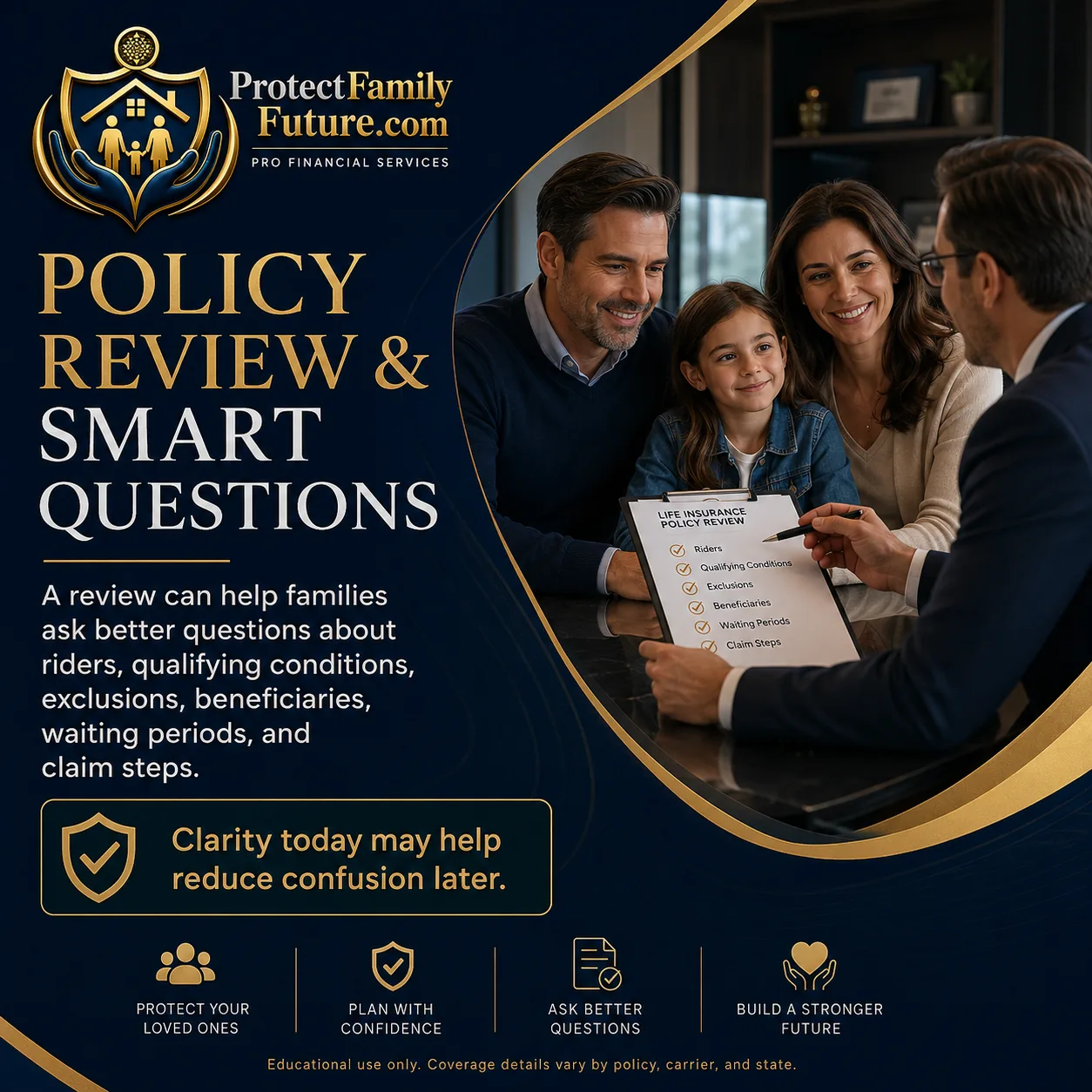
A policy bought years ago may no longer match the family’s current needs. The coverage amount, riders, beneficiaries, ownership, premium structure, and policy values may need a fresh review.
  • Beneficiaries may be outdated after marriage, divorce, birth, or death
  • Riders may be missing, unavailable, expired, or misunderstood
  • Coverage may not match current mortgage, income, or family obligations
  • Premiums and policy values may need review before making changes
  • A current policy summary can help families ask better questions
Understanding policy access options and avoiding confusion
Access Confusion

What May Happen When Families Confuse Different Policy Options?

Living benefits, cash value, loans, surrender value, life settlements, and viatical settlements are different concepts.

Families may hear several phrases that sound similar. Each option can have different eligibility rules, tax considerations, costs, reductions, ownership requirements, and long-term consequences.

  • Living benefits generally depend on policy/rider language and qualifying events
  • Cash value access may involve withdrawals, loans, interest, surrender charges, or tax questions
  • Life settlements and viatical settlements involve selling policy rights and need careful review
  • Policy loans and withdrawals may affect future policy performance
  • Professional review helps avoid confusing one option for another
Book a living benefits policy review
Private Discovery Call

Book a Living Benefits Readiness Review

Educational. Private. Organized. No pressure.

Start with a simple review. We help you understand what documents to gather, which policy questions to ask, and what areas may need professional review before any decision is made.

  • Review your current family protection priorities
  • Identify whether living benefits or riders should be checked
  • Separate policy features from assumptions or marketing phrases
  • Prepare questions about costs, eligibility, reductions, and claim requirements
  • Take the next clear step with better information

Get Your Living Benefits Readiness Review

Share your details and we will help you understand which living benefits education topics may need attention.

PFF Master Lead Form
Educational • Private • Family-focused • No pressure
Living Benefits Review
Health Event Planning
Bills & Income Risk
Policy Checklist
Discovery Call
Educational Note: This section provides general family protection and living benefits education only. Living benefits, accelerated benefit riders, critical illness riders, chronic illness riders, terminal illness riders, long-term care-related provisions, waiver provisions, policy loans, cash value, surrender value, life settlements, viatical settlements, tax treatment, charges, exclusions, eligibility rules, claim requirements, benefit reductions, underwriting, and availability can vary by state, carrier, policy type, rider language, contract terms, and individual situation. Accessing benefits during life may reduce the policy’s death benefit, cash value, loan value, or other policy values. This information is not legal, tax, investment, insurance, medical, or financial advice and does not create any guarantee of eligibility, coverage, benefit access, claim approval, or financial outcome. Final decisions should be reviewed with qualified professionals authorized in your state.
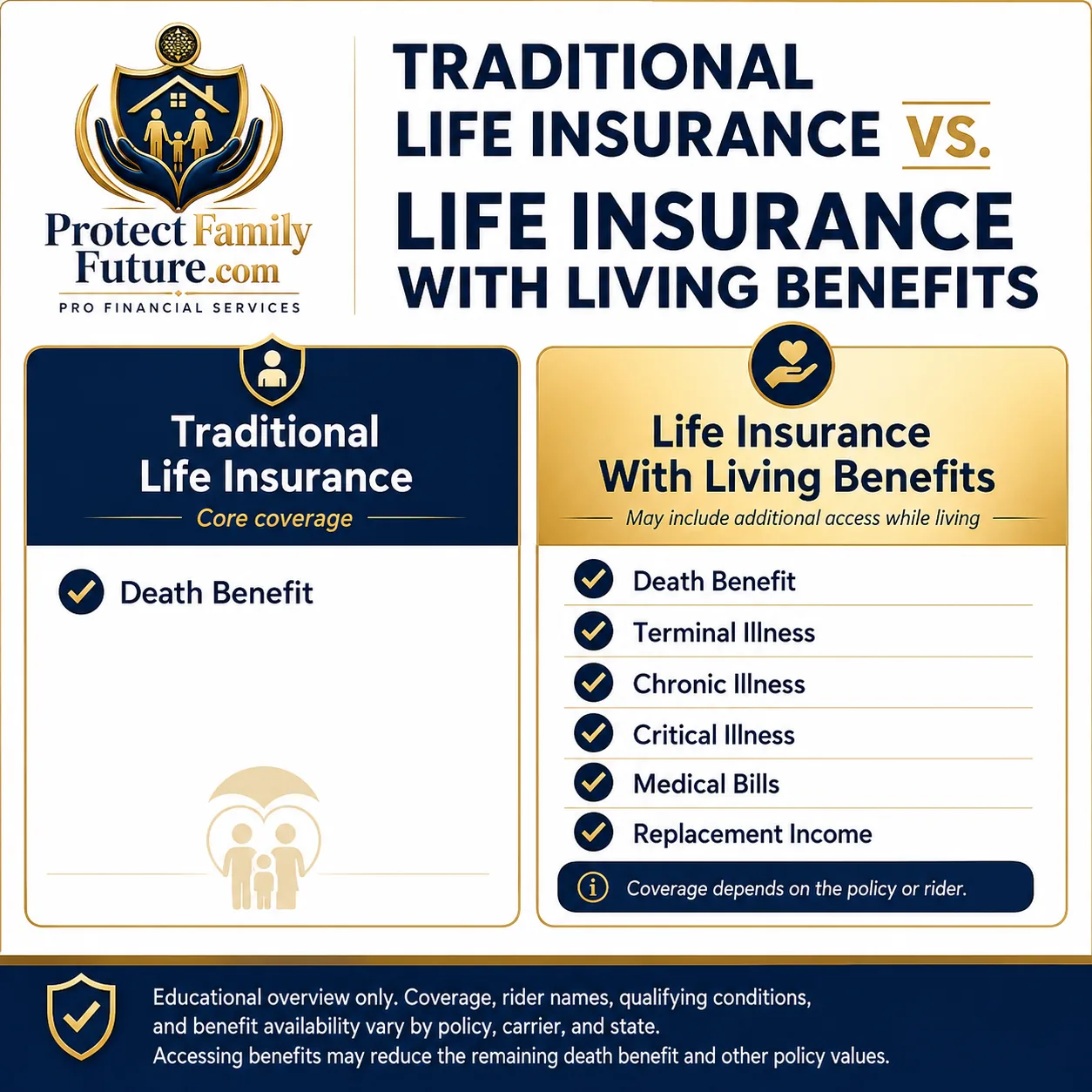
Important Living Benefits Comparison

Traditional Life Insurance vs. Life Insurance With Living Benefits

A traditional death-benefit policy may help loved ones after death. Living benefit features, when available and approved under the policy, may add another layer of planning during qualifying health events.

Traditional life insurance versus life insurance with living benefits comparison - ProtectFamilyFuture.com
Traditional Policy Only

What may happen if a policy only pays after death?

The family may have protection later, but no clear support during a qualifying illness.

Life insurance is often designed to help beneficiaries after death. Living benefit features, if included or added and if the claim is approved, may provide another planning option while the insured is still living.

  • A death-benefit-only policy may not address living health-event pressure.
  • Some policies may include riders, while others may not.
  • Permanent policies may have cash value, but cash value is not the same as living benefits.
  • Policy loans, withdrawals, surrender value, and settlements have separate rules.
  • Families should understand exactly what the policy can and cannot do before urgency.
Important: Living benefit access depends on policy language, rider availability, qualifying conditions, claim approval, state rules, and carrier requirements. Accessing benefits during life may reduce the remaining death benefit or other policy values.
Death Benefit Traditional protection is commonly focused on beneficiary support after death.
Living Benefits When available, riders may provide access during qualifying illness or care events.
Policy Review Families should review rider pages, exclusions, limits, charges, and claim requirements.
Beneficiary Impact Any accelerated amount may reduce the benefit or values available later.
Educational note: This section provides general Living Benefits Planning education only. Living benefits, accelerated benefit riders, critical illness riders, chronic illness riders, terminal illness riders, long-term care-related provisions, cash value, policy loans, withdrawals, surrender value, settlements, eligibility rules, claim requirements, charges, exclusions, underwriting, tax treatment, benefit reductions, and availability vary by policy, rider, carrier, state, and individual situation. This is not legal, tax, investment, insurance, medical, or financial advice and does not guarantee eligibility, coverage, benefit access, claim approval, or financial outcome.
Why Living Benefits Planning Matters

Life can change quickly. Your policy should be reviewed before urgency.

Living Benefits Planning is not only about life insurance after death. It helps families understand whether a policy may include features that can provide access to benefits during qualifying health events, and how those features may affect income, bills, caregiving, and the protection left for loved ones.

The hidden risk

The biggest problem is not only illness. It is not knowing what your policy can or cannot do.

Families often assume life insurance only matters after death, or assume living benefits automatically apply. A serious illness, chronic care need, terminal diagnosis, or income disruption can create urgent questions before the family has reviewed the policy.

  • 1
    Does the policy include living benefits or accelerated benefit rider language?
  • 2
    Which events may qualify, and what proof or claim review may be required?
  • 3
    How could benefit access affect the remaining protection for beneficiaries?
Education helps families review before urgency. This page helps you understand key living benefits topics and prepare better questions before speaking with qualified professionals.

Mortgage, Rent & Household Bills

A serious health event may reduce income while housing costs, utilities, debt, groceries, and family obligations continue.

Family Income Protection

Living benefits education helps families ask how policy features may fit with income replacement, emergency savings, and dependent care planning.

Spouse, Children & Caregiver Pressure

When a loved one becomes seriously ill, caregiving responsibilities may affect work schedules, household routines, and family finances.

Business Owner or Self-Employed Income Risk

Self-employed professionals and business owners may need to review how a serious illness could affect revenue, operations, and family cash flow.

Critical, Chronic or Terminal Illness

Policy wording may treat critical illness, chronic illness, terminal illness, and long-term care-related provisions differently.

Policy Riders & Beneficiary Impact

Using accelerated benefits during life may reduce the death benefit or other policy values available later, so families should understand the tradeoff.

Not sure where your current policy stands today?

Start with a simple education call and a policy review checklist. We will help you identify what to organize, which living benefits questions to ask, and where qualified professionals may be needed.

Educational note: This section provides general Living Benefits Planning education only. Living benefits, accelerated benefit riders, critical illness riders, chronic illness riders, terminal illness provisions, long-term care-related provisions, eligibility rules, charges, exclusions, claim requirements, tax treatment, underwriting, availability, and benefit reductions vary by policy, rider, carrier, state, and individual situation. This is not legal, tax, investment, insurance, medical, or financial advice and does not guarantee eligibility, coverage, benefit access, claim approval, or financial outcome.
Book Your Living Benefits Readiness Review

Review how your policy may help during qualifying health events.

Schedule a private educational discovery call to review living benefits concepts, policy questions, rider awareness, health-event planning, and family protection priorities before a crisis happens.

Living Benefits • Policy Review • Family Protection

Start with a clear living benefits conversation.

This call helps you understand what to organize, which questions to ask, and how living benefits may fit into a broader family protection plan. We keep the conversation educational, private, and simple.

  • Review whether your current policy has living benefit features or riders
  • Understand critical, chronic, and terminal illness benefit questions
  • Identify possible income, mortgage, and caregiving pressure points
  • Prepare questions about eligibility, reductions, costs, and claim requirements
  • Use calendar, phone, email, or WhatsApp for easy follow-up
Have an existing policy? Bring your policy summary, rider pages, beneficiary page, and recent statement if available. We can help you understand what questions to ask next.

Live Booking Calendar

Select an available date and time for your Living Benefits Planning education call. Your confirmation and meeting details will be sent automatically.

Step 1 Select date
Step 2 Choose time
Step 3 Confirm review

If the calendar does not load inside this page, open the booking calendar directly.

Open Booking Calendar

Want us to call you?

Send your contact details. If your preferred calendar time is not available, we will help you find the right next step for your Living Benefits Planning review.

Educational review Understand living benefit concepts clearly
Policy checklist Know what documents to organize
Easy follow-up We can call, email, text, or meet online
Quick Living Benefits Contact Form
PFF Master Lead Form
Education note: This Living Benefits Planning discovery call is for general financial education, family protection awareness, policy review preparation, and planning education only. Living benefits, accelerated benefit riders, critical illness riders, chronic illness riders, terminal illness riders, long-term care-related provisions, eligibility rules, claim requirements, charges, exclusions, tax treatment, benefit reductions, underwriting, and availability can vary by state, carrier, policy type, rider language, and individual situation. This is not legal, tax, investment, insurance, medical, estate planning, or professional advice and does not guarantee eligibility, coverage, benefit access, claim approval, or financial outcome. Final decisions should be reviewed with qualified professionals authorized in your state.
ProtectFamilyFuture.com | Family Financial Education • Living Benefits Awareness • Policy Review Guidance
Book a private discovery call before a serious health event creates urgency.
Living Benefits Planning Education

Protect your family during life’s serious health events. Understand what your policy may do.

A clear, family-first education experience to help you understand the role of living benefits, accelerated benefit riders, critical illness riders, chronic illness riders, terminal illness provisions, policy review, and family income protection before a crisis creates financial pressure.

Educational guidance only. We help families understand key policy questions and prepare for conversations with qualified insurance, financial, legal, tax, and medical professionals where appropriate.

The moment that matters

When illness affects income, your family should not be guessing what the policy can do.

Many families buy life insurance for death-benefit protection, but never review whether the policy includes living benefit features, how those features may work, or what may happen if a serious illness affects income, mortgage payments, caregiving, and household responsibilities.

What benefits may exist? Learn how living benefits and accelerated benefit riders may be listed in a policy or rider page.
What events may qualify? Understand why critical, chronic, terminal, and long-term care-related wording can vary by policy and carrier.
How could benefits affect family protection? Review why accessing benefits during life may reduce remaining death benefit, cash value, loan value, or other policy values.
Start with education. Review before urgency. Choose the planning path that fits your family: living benefits awareness, critical illness questions, chronic illness care planning, terminal illness provisions, policy review, beneficiary review, or family income protection preparation.
01

Living Benefits Awareness

Understand what living benefits may mean and why every family should know whether their policy includes these features.

02

Critical Illness Questions

Learn why a serious diagnosis does not automatically mean benefit access unless policy terms and claim rules are satisfied.

03

Chronic Care Planning

Review how long-term health limitations may affect income, caregiving, daily living needs, and family responsibilities.

04

Policy Review Checklist

Prepare policy pages, riders, beneficiaries, premiums, values, and carrier contact details before important decisions are needed.

Watch. Learn. Then Review.

Start with living benefits education, then take the next clear step.

Before a serious illness creates financial pressure, it helps to understand the right policy questions. This short education section helps families prepare with clarity before reviewing coverage, riders, beneficiary impact, and next steps.

Short Education Video

What every family should understand about living benefits before a health event.

Use this section for a short video introduction explaining how living benefits, accelerated benefit riders, critical illness riders, chronic illness riders, terminal illness provisions, policy review, and family income protection questions may work together.

Video placeholder Replace this placeholder later with your YouTube, Vimeo, or hosted video embed. Keep this same section design for a premium Living Benefits education video.
Private Living Benefits Review

Book a call to organize your policy questions.

This call is for families who want to understand what to prepare, what to review, and which living benefits or policy questions may need attention before any coverage decision is made.

01
Review your current family protection situation Dependents, income, mortgage, debts, caregiving responsibilities, existing policies, and family priorities.
02
Identify policy areas to organize Policy type, riders, beneficiary page, premium details, carrier contact information, exclusions, limits, and claim questions.
03
Create your living benefits question checklist A clear list of questions about eligibility, qualifying events, costs, reductions, tax questions, and professional review needs.
Before the call Gather your policy summary, rider pages, beneficiary details, premium information, and recent statement if available.
During the call We help you organize education topics and identify questions about critical, chronic, terminal, income, caregiving, and family protection concerns.
After the call You will have a clearer checklist for policy review, rider questions, beneficiary impact, professional guidance, and next steps.
Educational note: This section is for general Living Benefits Planning education only. Living benefits, accelerated benefit riders, critical illness riders, chronic illness riders, terminal illness riders, long-term care-related provisions, policy loans, cash value, surrender value, charges, exclusions, benefit reductions, claim requirements, underwriting, tax treatment, and availability can vary by state, carrier, policy type, rider language, and individual situation. Accessing benefits during life may reduce the policy’s death benefit, cash value, loan value, or other policy values. This is not legal, tax, investment, insurance, medical, or financial advice and does not guarantee eligibility, coverage, benefit access, claim approval, or financial outcome.

FINANCIAL FREEDOM & EDUCATION CENTER

Protect • Plan • Build • Grow

Family Protection Planning - ProtectFamilyFuture.com
Family Financial Education

Family Protection Planning

Protect what matters most. Plan with confidence.

Explore education-first family protection planning designed to help families prepare for income protection, mortgage protection, final expenses, and long-term family security.

  • Income replacement awareness for loved ones
  • Mortgage and debt protection education
  • Children’s future protection planning
  • Living benefits awareness while you are still living
  • Affordable options for different life stages
Will and Trust Legacy Planning - ProtectFamilyFuture.com
Legacy Planning Education

Will & Trust Planning

A strong legacy starts with a clear plan.

Learn how will and trust planning, estate planning, beneficiary preparation, and family asset protection conversations can help loved ones move forward with clarity.

  • Will and trust education awareness
  • Estate planning and legacy planning concepts
  • Beneficiary and asset transfer preparation
  • Family protection and peace-of-mind planning
  • Organized next-generation financial conversations
Million Dollar Baby Program - Child Future Planning
Child Future Planning

Million Dollar Baby Program

Start early. Build wealth. Secure their future.

Explore child future planning concepts designed to help families understand long-term growth potential, early planning, family protection, and legacy-building strategies.

  • Early start child future planning education
  • Long-term wealth-building awareness
  • College and future funding conversations
  • Family protection and legacy planning options
  • Small steps today for bigger opportunities tomorrow
Kids College Funding and Child Future Planning
College Funding Strategies

Kids College Funding

Start early. Save smarter. Build their future.

Explore college savings planning, 529 plan education, education savings strategies, student loan burden awareness, and child future planning for families.

  • College savings planning awareness
  • 529 college savings plan education
  • Education savings and tuition planning
  • Student loan burden reduction awareness
  • Flexible planning for your child’s future
Living Benefits Planning - Protect Today Enjoy Today Secure Tomorrow
Living Benefits Awareness

Living Benefits Planning

Protect today. Enjoy today. Secure tomorrow.

Living benefits education helps families understand how some protection strategies may provide access to benefits while still living during qualifying health events.

  • Take money while you are living awareness
  • Income protection and family protection education
  • Critical, chronic, or terminal illness planning concepts
  • Help protect savings during health challenges
  • Peace of mind for your family
Tax-Free Strategies and Tax-Advantaged Retirement Planning
Tax-Free Retirement Education

Tax-Free Strategies

Keep more today. Keep more tomorrow.

Explore tax-efficient growth, tax-advantaged income, retirement income planning, and legacy planning strategies designed to help families make smarter long-term decisions.

  • Tax-efficient growth strategies
  • Tax-advantaged retirement income awareness
  • Legacy planning options
  • Potential tax-burden reduction conversations
  • Financial freedom and long-term security planning
Weekly Educational Webinar and Discovery Call
Private Discovery Call

Book Your Discovery Call

Educational. Private. No pressure.

Start with a simple educational conversation. We’ll help you understand your goals and guide you toward the right financial education topic or next step.

  • Private educational discovery call
  • Family protection and planning conversation
  • Retirement awareness and legacy planning review
  • College funding and child future planning guidance
  • Attend our weekly educational webinar

Get Your Complimentary Review

Share your details and we’ll help you choose the right starting point.

PFF Master Lead Form
Educational • Private • No pressure
🛡️ Family Protection Education
📘 Financial Literacy Resources
📈 Retirement Awareness
🌳 Legacy Planning Conversations
🤝 Private Discovery Call
Years of Experience
0 +
Clients Served
0 +
Financial Services Products Served
0 +

Schedule Free! Complementary Discovery Call Today

TRUSTED BY TOP FINANCIAL INSTITUTIONS
OUR TRUSTED FINANCIAL PARTNERS

COLLABORATING WITH INDUSTRY LEADERS TO HELP FAMILIES EXPLORE QUALITY FINANCIAL PROTECTION, RETIREMENT, LEGACY, AND EDUCATION SOLUTIONS.

Financial Freedom & Education Center

Family Protection Planning

Family Protection
Planning

Help protect your loved ones from life’s unexpected events with customized solutions.

Learn More

Retirement Income Planning

Retirement Income
Planning

Create reliable income for retirement and enjoy the lifestyle you’ve worked for.

Learn More

Living Benefits Planning

Living Benefits
Planning

Access benefits while you’re living and protect your wealth and health.

Learn More

College Funding and Child Future Planning

College Funding &
Child Future Planning

Build a brighter future for your children with smart education and financial planning.

Learn More

7 Smart Financial Moves Modern Families Should Review

Top recommended education areas for complete family 360° protection.

Will and Trust Legacy Planning

Will & Trust
Legacy Planning

LEARN MORE
Kids College Funding Education Planning

Kids College Funding
& Education Planning

LEARN MORE
Living Benefits Planning

Living Benefits
Planning

LEARN MORE
Million Dollar Baby Program

Million Dollar Baby
Program

LEARN MORE
Family Protection Planning

Family Protection
Planning

LEARN MORE
Retirement Income Planning

Retirement Income
Planning

LEARN MORE
Tax Free Retirement Strategies

Tax-Free Retirement
Strategies

LEARN MORE

Smart Protection Strategies Modern Families Are Reviewing Today

Explore essential education areas for family protection, children’s future planning, living benefits, health challenges, retirement strategies, and will & trust legacy planning..

Helping Families Secure Their Future

Helping Families
Secure Their Future

Discover how family protection planning can help create confidence today and tomorrow.

LEARN MORE

Million Dollar Baby Program

Million Dollar Baby
Program

Learn how early planning may help build a stronger foundation for a child’s future.

LEARN MORE

College Education Planning

College Education
Planning

Explore education funding ideas designed to support children’s dreams and opportunities.

LEARN MORE

Will and Trust Estate Planning

Will & Trust
Estate Planning

Help protect your wishes, loved ones, and legacy for future generations.

LEARN MORE

Living Benefits Planning

Living Benefits
Planning

Learn how living benefits may help provide support while you are living, not only after death.

LEARN MORE

Protect Your Family During Health Challenges

Protect During
Health Challenges

Explore planning options that may help during qualifying health events.

LEARN MORE

Reduce Future Tax Burden

Reduce Future
Tax Burden

Explore tax-aware retirement strategies designed to help protect long-term income.

LEARN MORE

401k IRA Retirement Strategies

401(k), IRA &
Retirement Strategies

Review rollover, retirement income, and protection strategies for long-term security.

LEARN MORE

Protect • Plan • Build • Grow

Explore our education-first pathways for family protection, business opportunity, leadership development & community impact.

Family Protection
Family Financial Education

Family
Protection

  • Income Protection
  • Living Benefits
  • Child Future Planning
  • Legacy Planning
  • Estate Education

Protect what matters most.

Explore strategies designed to help safeguard your family’s future and create long-term confidence.

Learn More
Business Opportunity
Builder Opportunity

Business
Opportunity

  • Why Join
  • Flexible Part-Time
  • Leadership Development
  • Builder Path
  • Weekly Webinar

Earn. Lead. Impact. Freedom.

Create additional income and build a purpose-driven path while helping families.

Explore Opportunity
Leadership Academy
Training & Mentorship

Leadership
Academy

  • Leadership Development
  • Communication Skills
  • Team Building
  • Personal Growth
  • Mentorship

Develop. Grow. Succeed.

Build leadership skills, unlock your potential, and create lasting impact.

Join Leadership Academy
Community Impact
Serve & Educate

Community
Impact

  • Financial Workshops
  • Family Education
  • Youth Financial Literacy
  • Community Events
  • Service Projects

Serve. Educate. Empower.

Build stronger communities today while helping families prepare for a better tomorrow.

Make an Impact
Living Benefits Education and Policy Review - ProtectFamilyFuture.com
FREE LIVING BENEFITS EDUCATION

Attend a Living Benefits Education Session

Understand the questions before a serious health event creates urgency.

Learn how certain life insurance policy features may help during qualifying illness, how riders may be reviewed, and what families should understand before assuming a policy can be used while living.

  • Living benefits and accelerated benefit awareness
  • Critical, chronic, and terminal illness questions
  • Policy rider and beneficiary impact review
  • Income, mortgage, and caregiving pressure awareness
  • Private discovery call option after review

Need help choosing the next step?

If you cannot call now, use the form below or send a WhatsApp message. We will help you choose the right education path.

Book Discovery Call WhatsApp / Text Now Call / Text: (732) 318-8662
Educational • Private • No pressure

Frequently Asked Questions

What are living benefits?

Living benefits are policy features or riders that may allow access to a portion of benefits while the insured is living, usually only after certain qualifying health events and claim requirements are met.

Does every policy include living benefits?

No. Availability depends on the policy type, rider language, carrier, state, underwriting, and when the policy was issued. Older policies may not include the same features as newer policies.

What health events may qualify?

Some policies may address terminal illness, chronic illness, critical illness, or long-term care-related situations. The exact definitions, limits, and claim requirements vary by policy and rider.

Can living benefits replace health insurance?

No. Living benefits are not health insurance and should not be treated as a replacement for medical coverage, disability coverage, long-term care coverage, or emergency savings.

Can accessing benefits reduce what remains for beneficiaries?

Yes, accessing benefits during life may reduce the remaining death benefit, cash value, loan value, or other policy values. Families should review the impact before making decisions.

What should I review before a call?

If available, gather your policy summary, rider pages, beneficiary page, premium information, recent statement, and carrier contact details.

What if I cannot call right now?

Fill out the form, send a WhatsApp message, or text/call (732) 318-8662. We will follow up and help you choose the right next step.

Not ready to pick a time? Send your details.

If you cannot call now, fill out this form. We will contact you to help with your Living Benefits education questions.

PFF Master Lead Form
We will contact you to help you take the next step.
👨‍👩‍👧

Ready to take the next step?

Let’s review your goals, current policy questions, and how your family may prepare before a serious health event creates pressure.

Book Discovery Call WhatsApp / Text Now Call (732) 318-8662


100% Private   •   No Pressure   •   Educational
Educational note: This section provides general Living Benefits Planning education only. Living benefits, accelerated benefit riders, critical illness riders, chronic illness riders, terminal illness riders, long-term care-related provisions, eligibility rules, claim requirements, exclusions, charges, tax treatment, underwriting, benefit reductions, and availability vary by policy, rider, carrier, state, and individual situation. Accessing benefits during life may reduce remaining death benefit, cash value, loan value, or other policy values. This is not legal, tax, investment, insurance, medical, or financial advice and does not guarantee eligibility, coverage, benefit access, claim approval, or financial outcome.