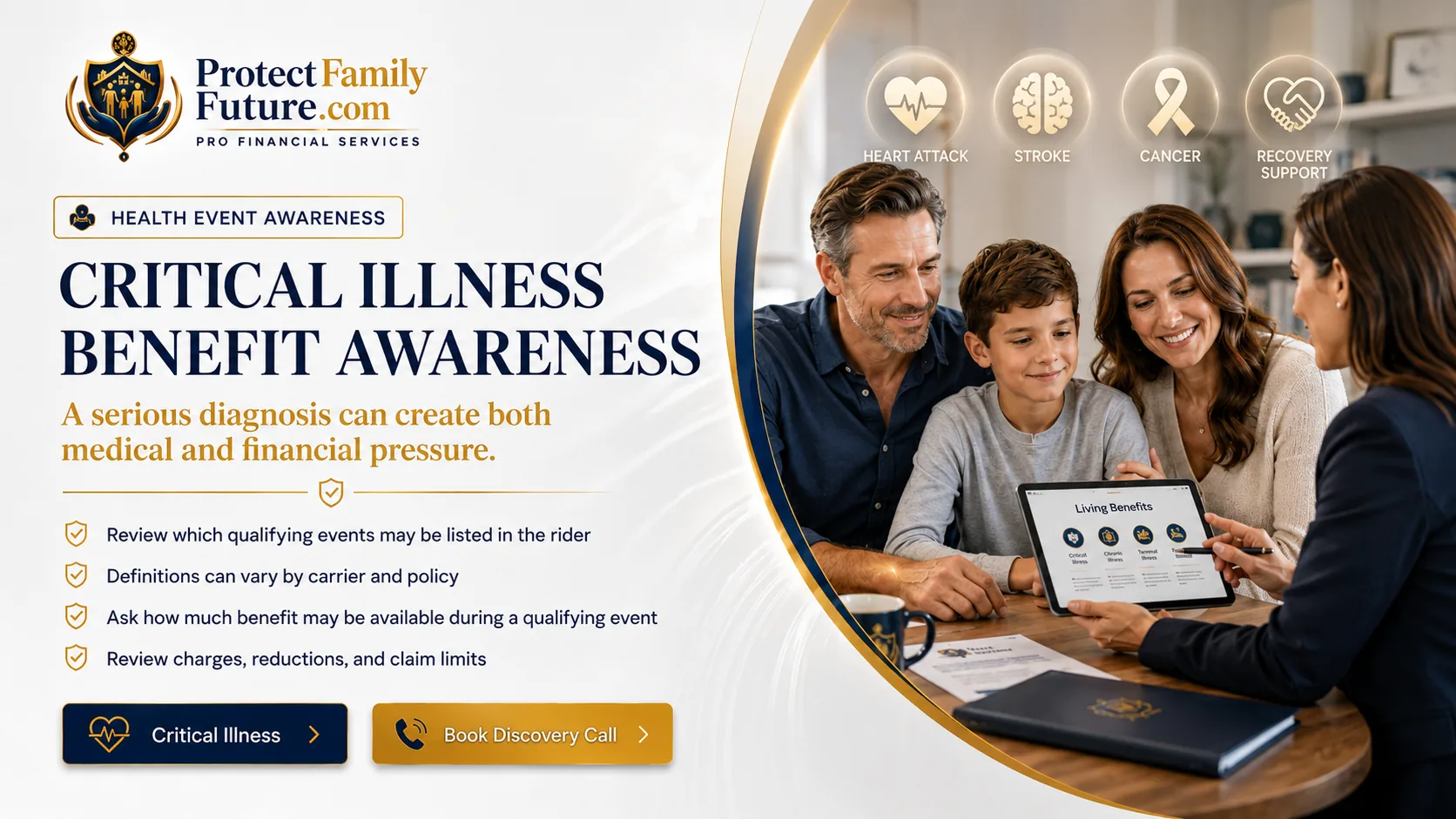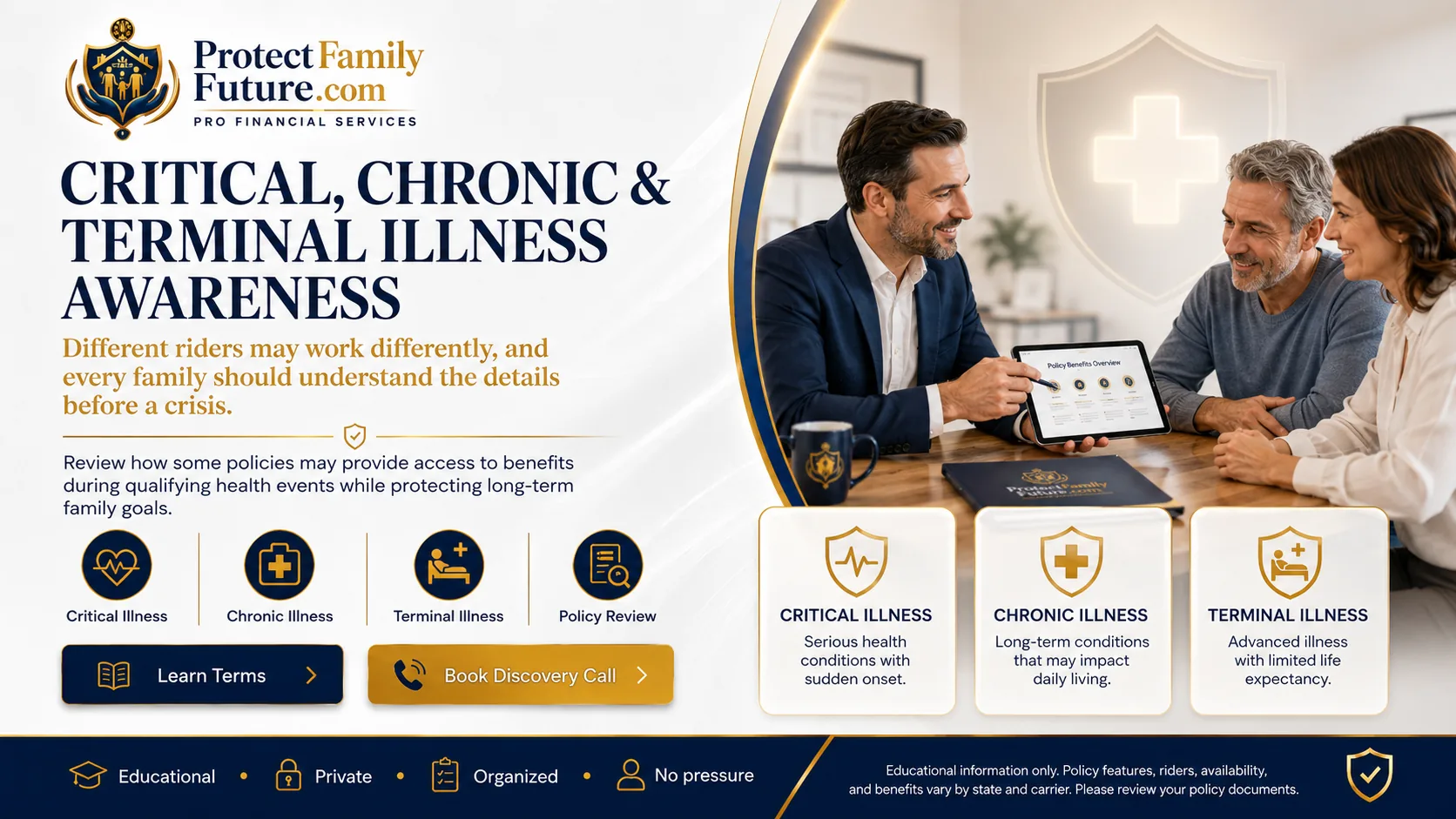
Learn how certain policy features may help during qualifying health events while protecting long-term family goals.
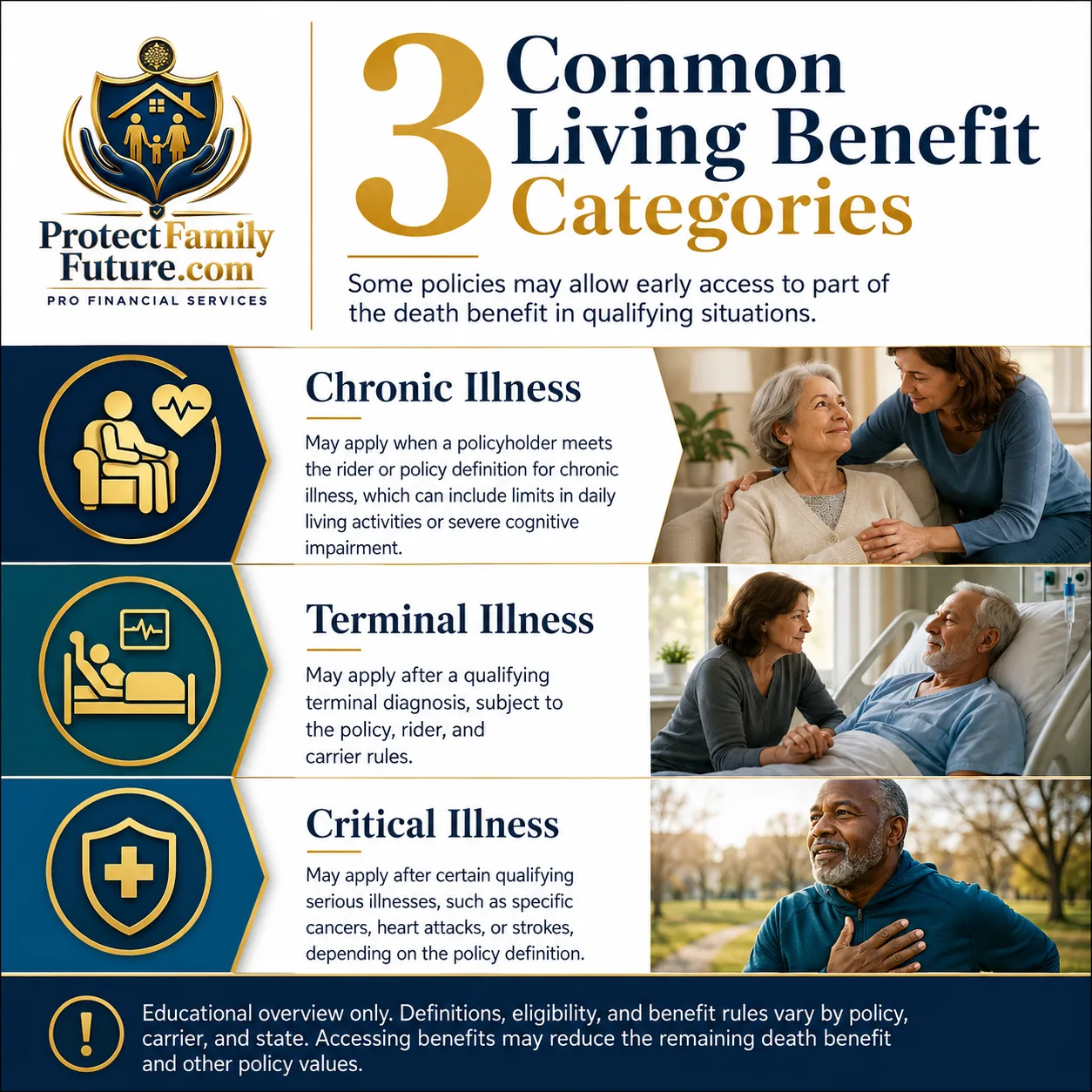
Living benefits education helps families understand how certain life insurance policy features may provide access to benefits during qualifying health events, while keeping long-term family protection goals in mind.

Living benefits are policy features or riders that may allow access to a portion of benefits during certain qualifying health situations. Details depend on the policy, rider language, carrier, state availability, underwriting, and claim rules.
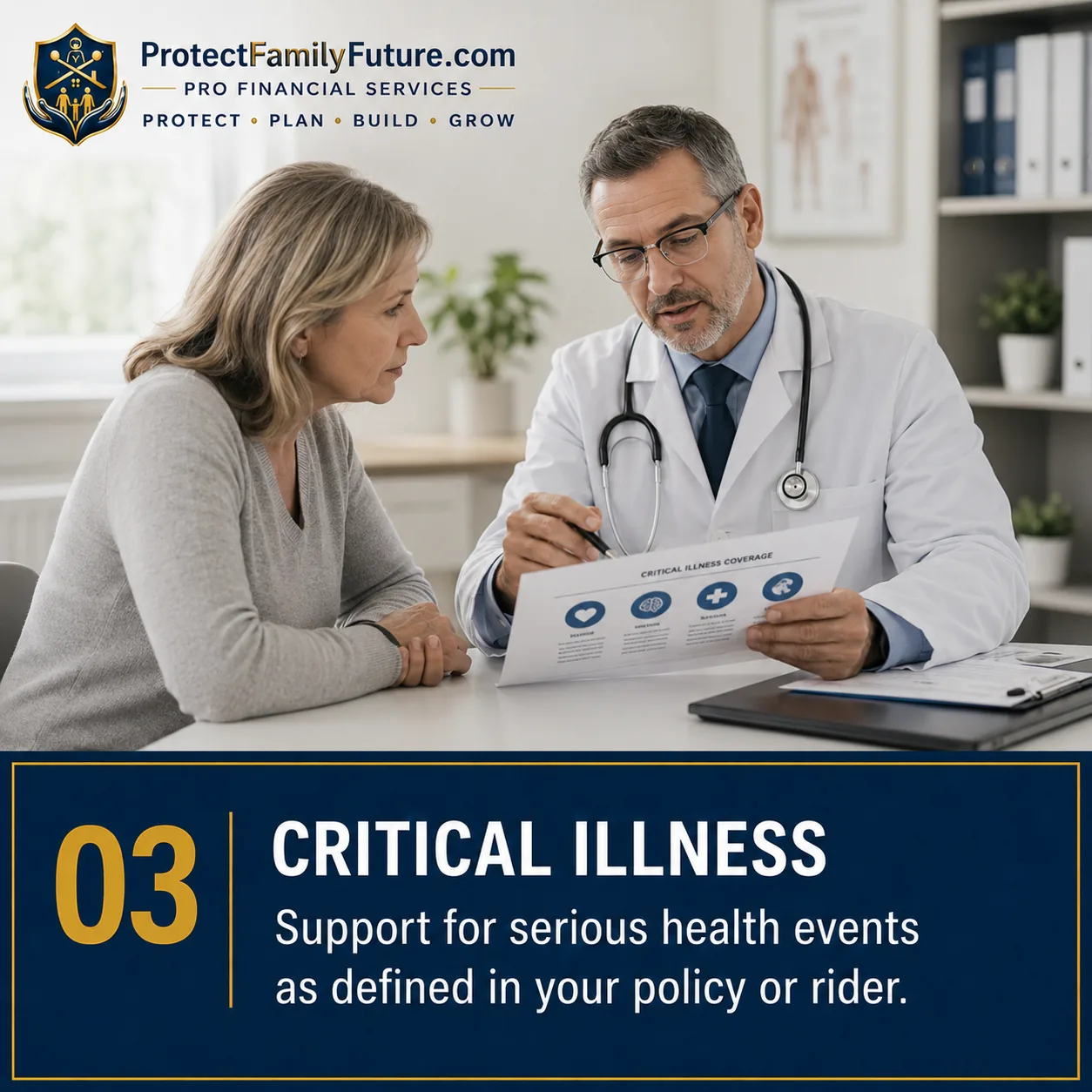
Critical illness benefit provisions may be designed around specific qualifying events listed in the policy or rider. Families should understand what may qualify, what may be excluded, and how benefit access may affect the rest of the policy.
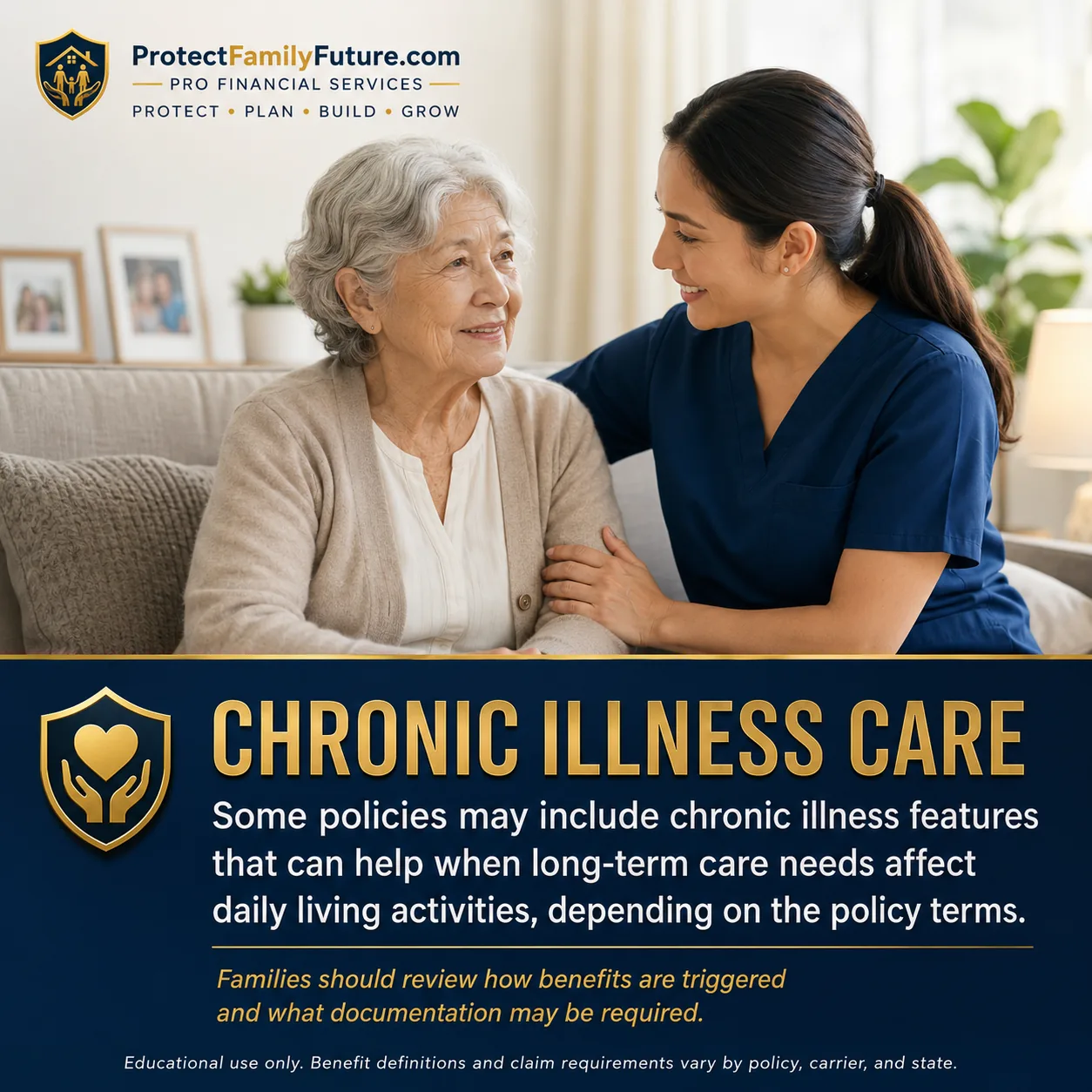
Chronic illness benefits may involve specific definitions, certification requirements, and benefit-access rules. Families should understand how chronic illness riders differ from critical illness riders, terminal illness riders, disability coverage, and long-term care insurance.

Some policies may allow access to a portion of benefits when a qualifying terminal illness diagnosis is certified. The life-expectancy requirement, benefit amount, waiting period, fees, and remaining protection can vary by policy and carrier.
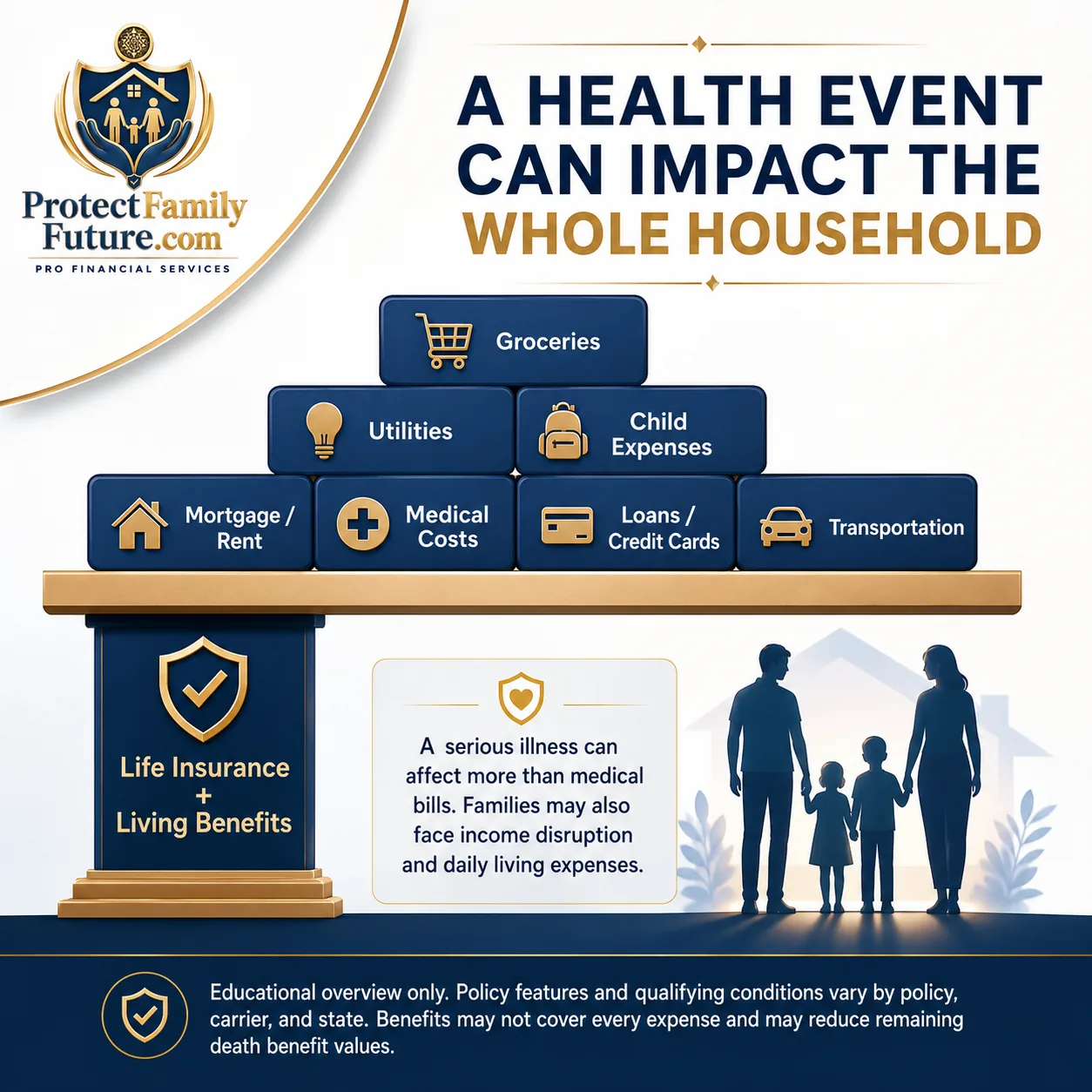
When a major health event happens, families may face medical costs, travel needs, income disruption, caregiving expenses, mortgage payments, debt pressure, and everyday household obligations.

Living benefits education can be part of a broader family protection plan that reviews income needs, mortgage exposure, children’s future, retirement goals, caregiving responsibilities, and beneficiary protection.
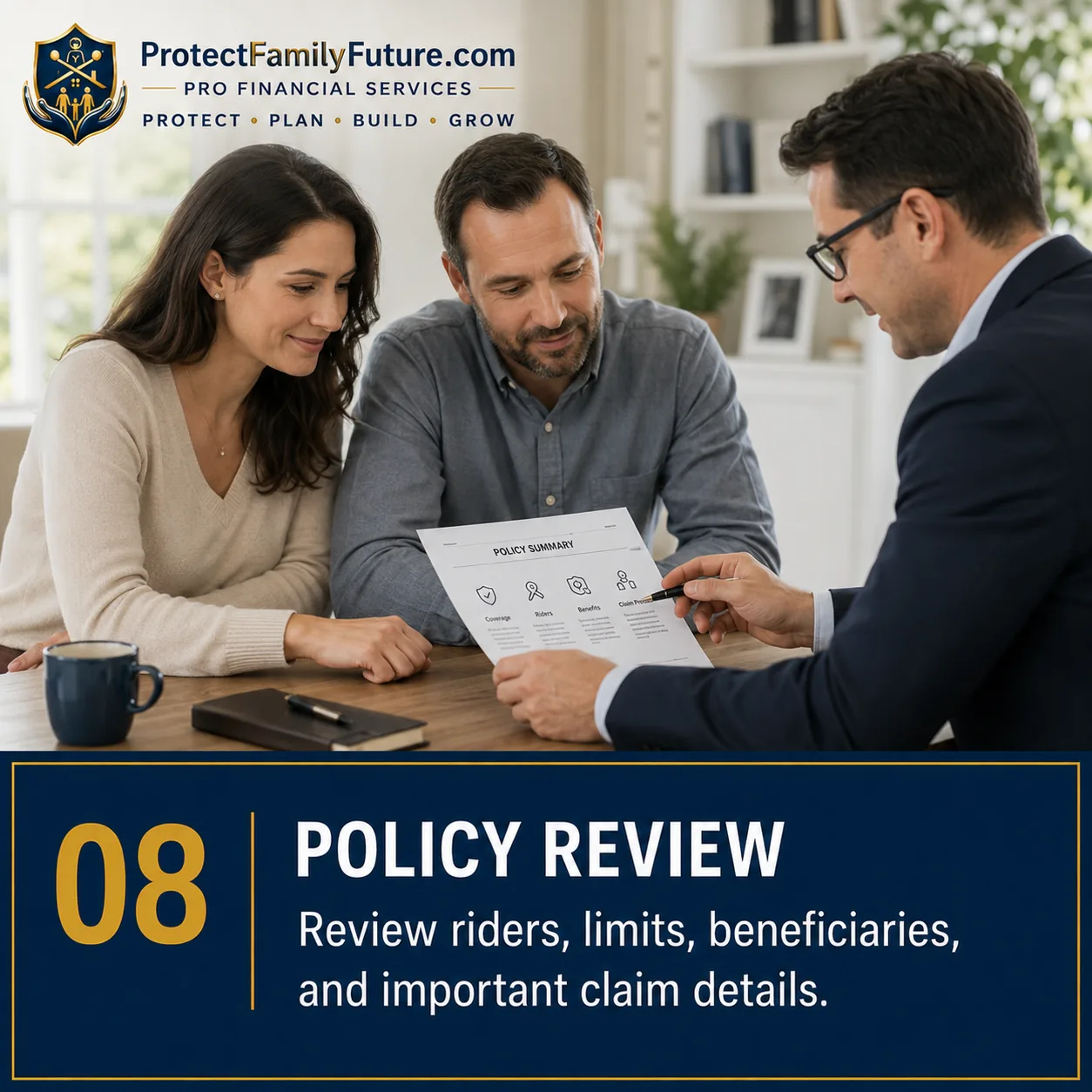
A policy review can help families understand what they own, which riders are included or optional, what changed since the policy was issued, and whether the plan still supports today’s goals.

Before selecting or updating coverage, families should understand what is included, what is optional, what conditions may qualify, how claims are reviewed, and how using benefits may affect future protection.

Start with a simple conversation. We help you review your family situation, understand living benefits concepts, identify policy questions, and choose the next education step.
Share your details and we will help you choose the right Living Benefits education starting point.
 Living Benefits Education
 Health Event Awareness
 Bills & Income Planning
 Family Protection
 Discovery Call
A serious illness or health event can create medical, income, mortgage, caregiving, and family pressure. Learn what families may face when their life insurance has no living benefit features, the features are unclear, or the policy has never been reviewed.
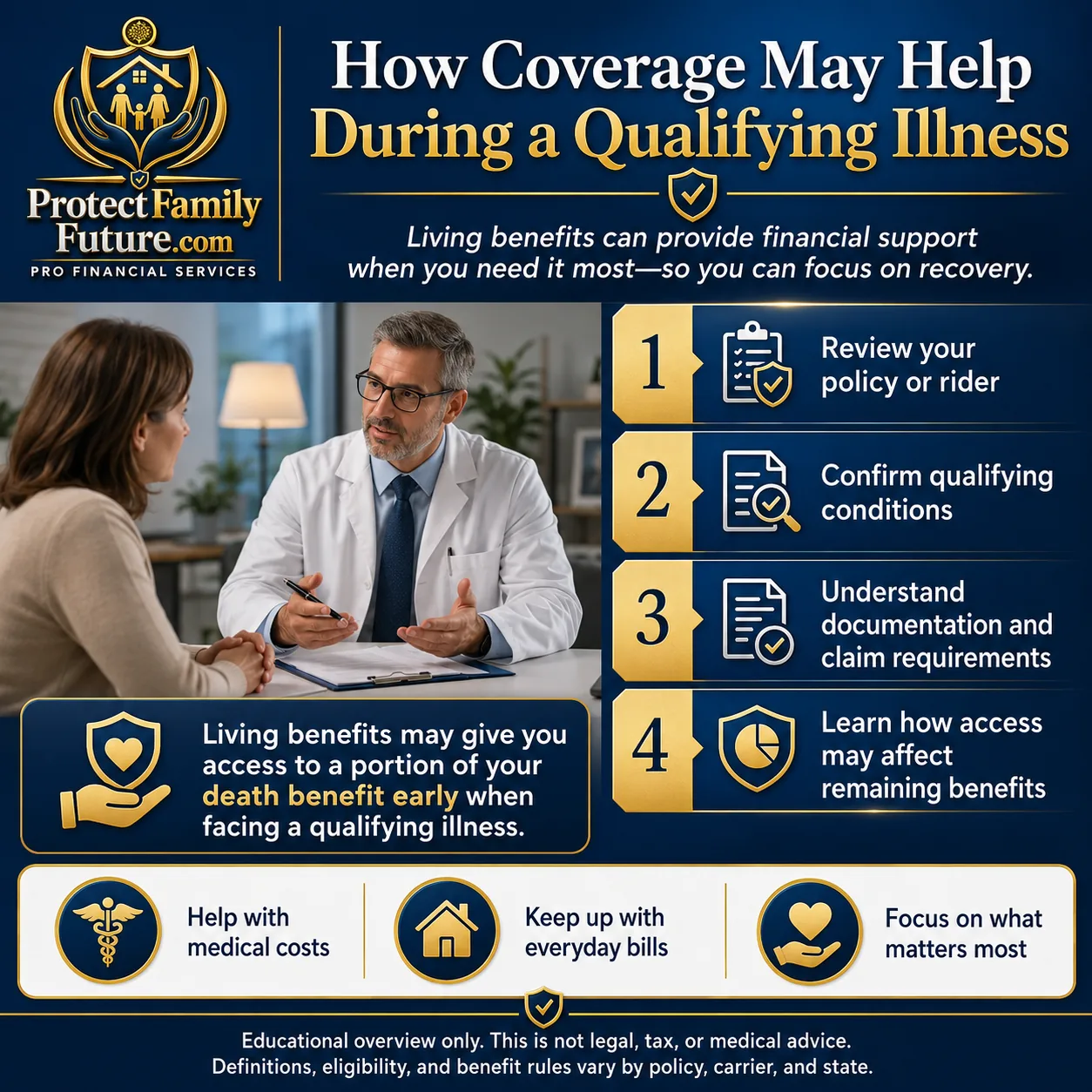
Many families buy life insurance for loved ones, then never review whether the policy includes living benefit features, accelerated benefit riders, chronic illness options, critical illness options, or terminal illness provisions.

A stroke, heart condition, cancer diagnosis, major surgery, chronic illness, accident, or serious medical event can disrupt income, caregiving, transportation, work schedules, and household responsibilities.
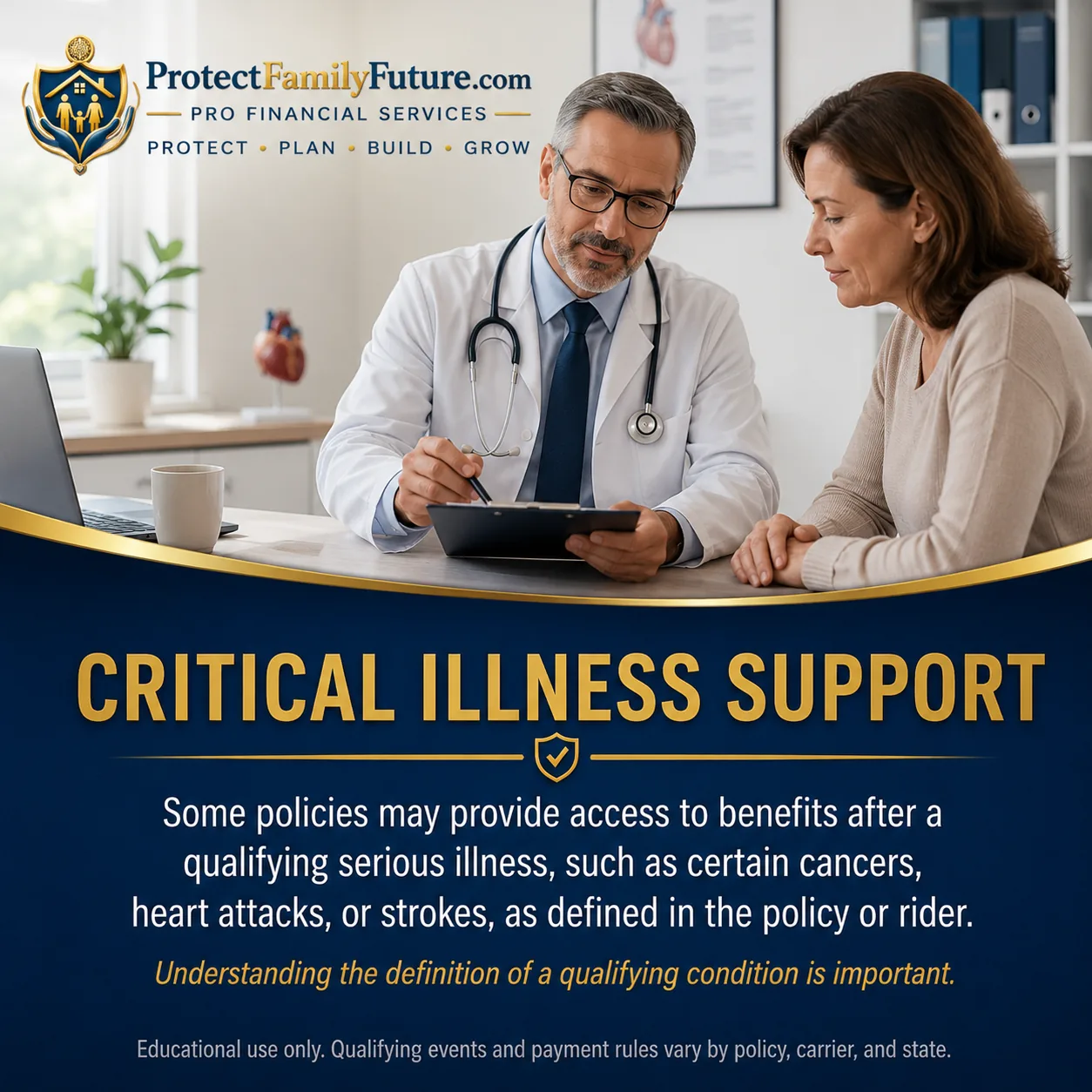
Critical illness riders may address certain qualifying conditions, but the exact conditions, definitions, waiting periods, exclusions, claim process, and available benefit amount can vary.
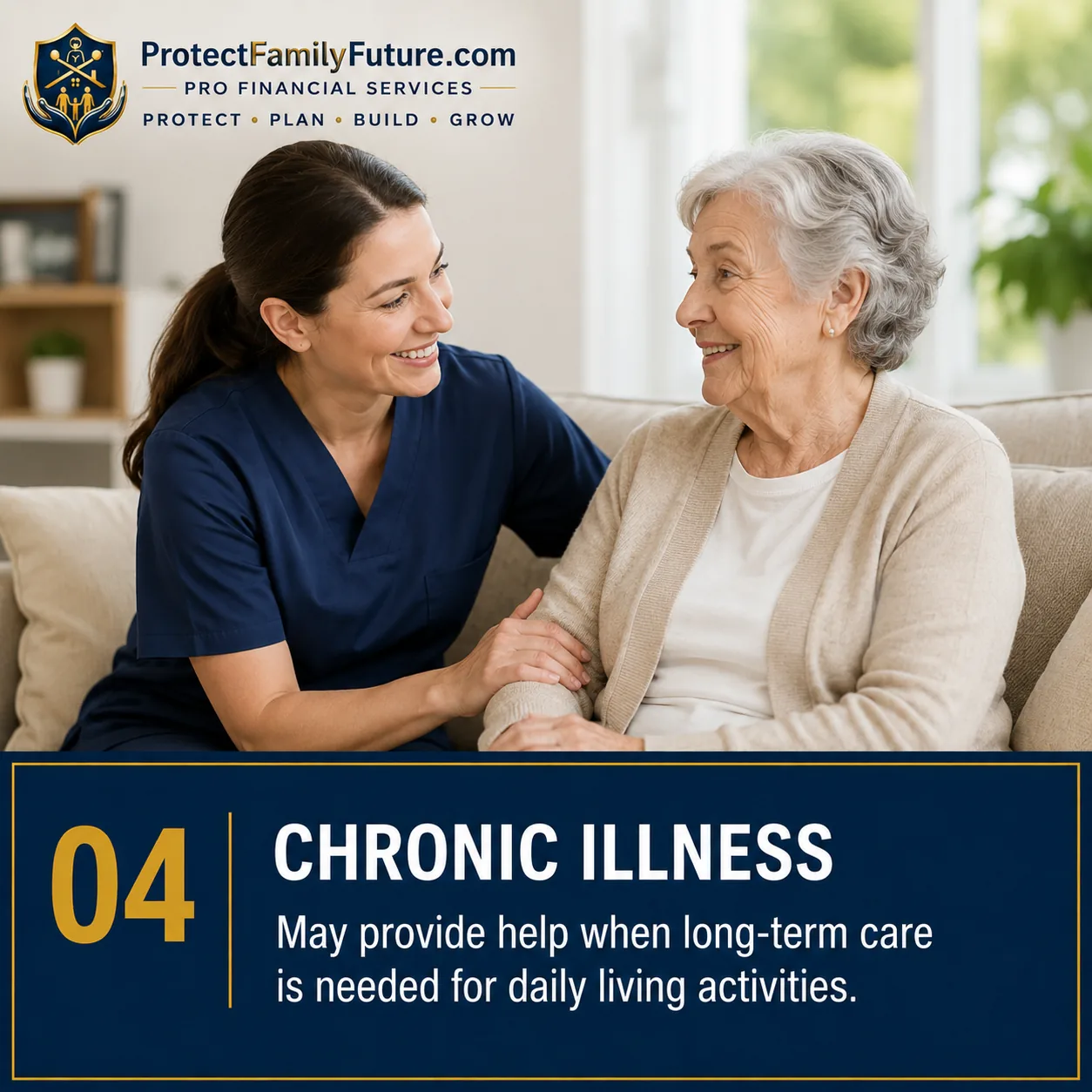
Chronic illness planning is different from a one-time emergency. The family may need help with daily activities, home modifications, transportation, supervision, caregiver schedules, and long-term financial decisions.
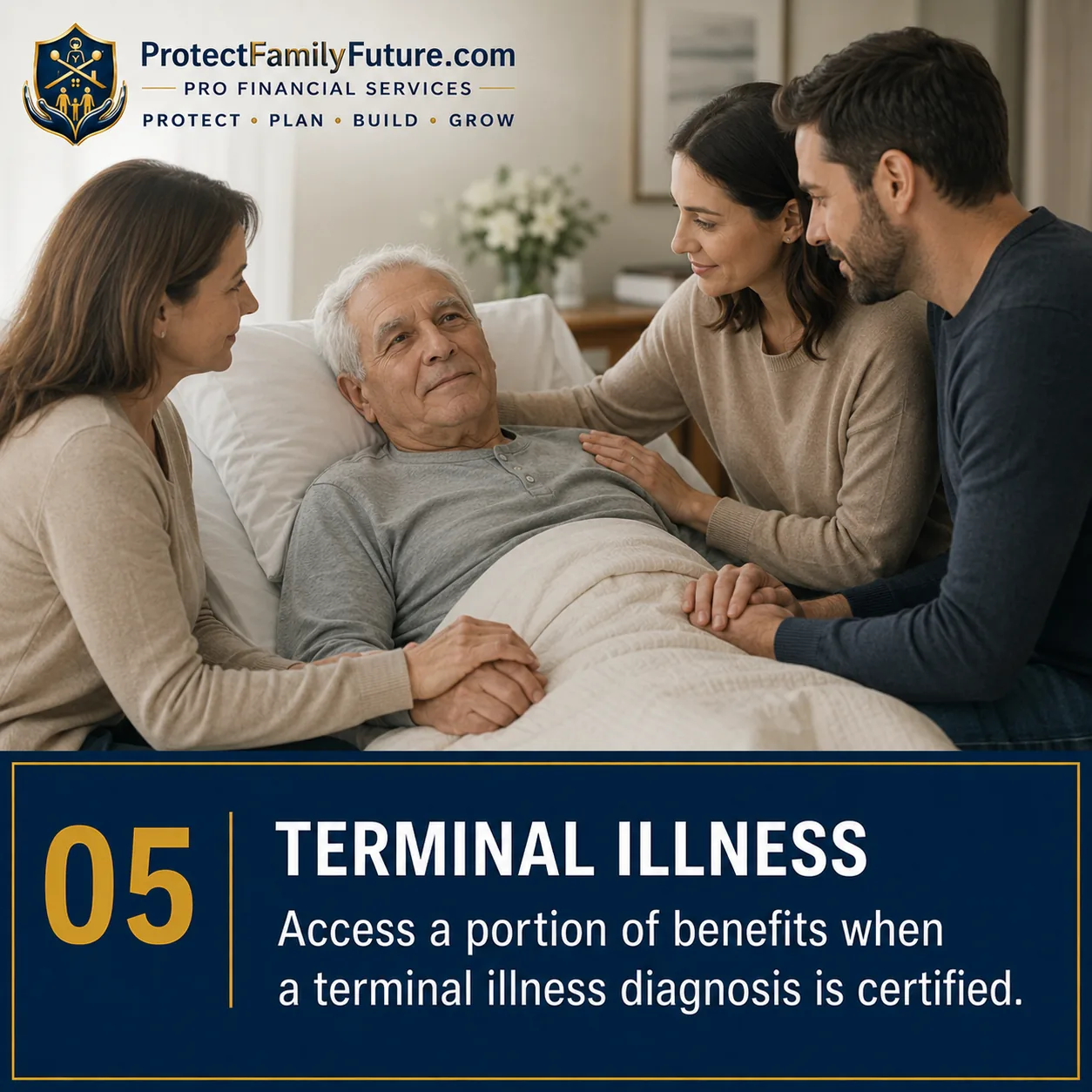
Some policies may include a terminal illness or accelerated death benefit provision. However, life-expectancy rules, benefit limits, waiting periods, administrative charges, and remaining death benefit treatment can vary.
Even with health insurance, families may still face deductibles, travel, missed work, caregiver costs, mortgage payments, rent, utilities, debt, groceries, and other daily obligations.
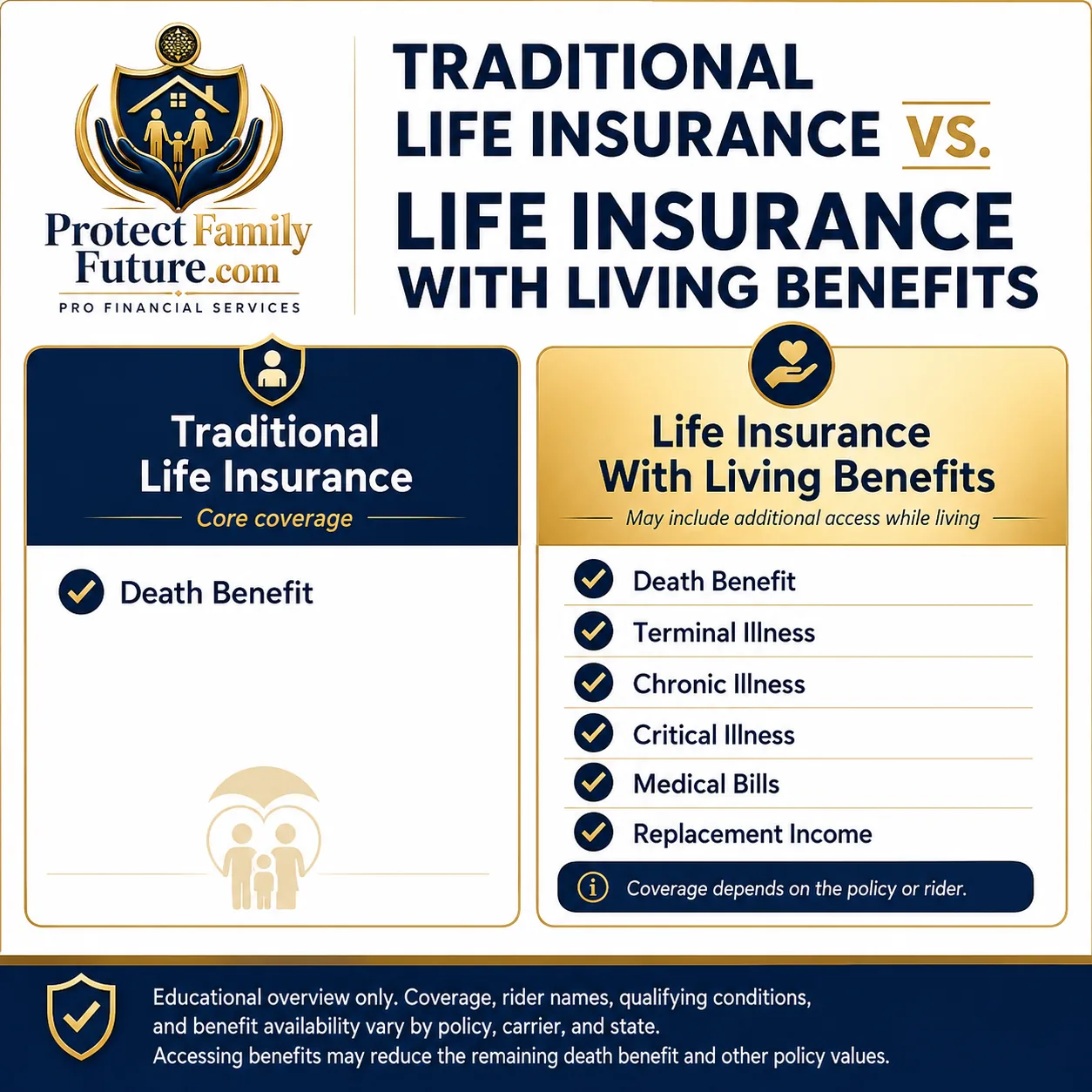
Traditional life insurance is designed primarily to help beneficiaries after death. Living benefit features, when available and approved, may offer an additional layer of planning during life.

A policy bought years ago may no longer match the family’s current needs. The coverage amount, riders, beneficiaries, ownership, premium structure, and policy values may need a fresh review.
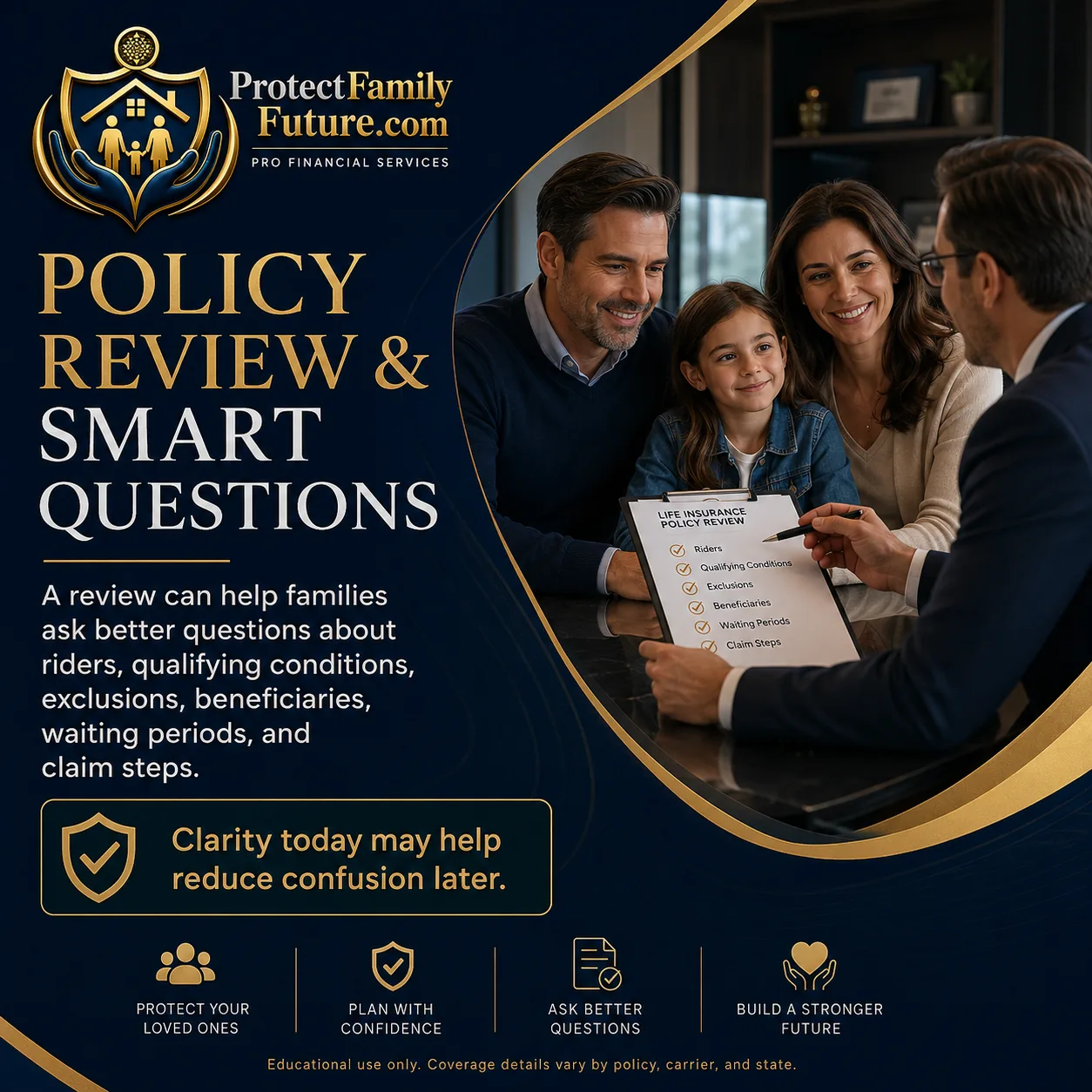
Families may hear several phrases that sound similar. Each option can have different eligibility rules, tax considerations, costs, reductions, ownership requirements, and long-term consequences.
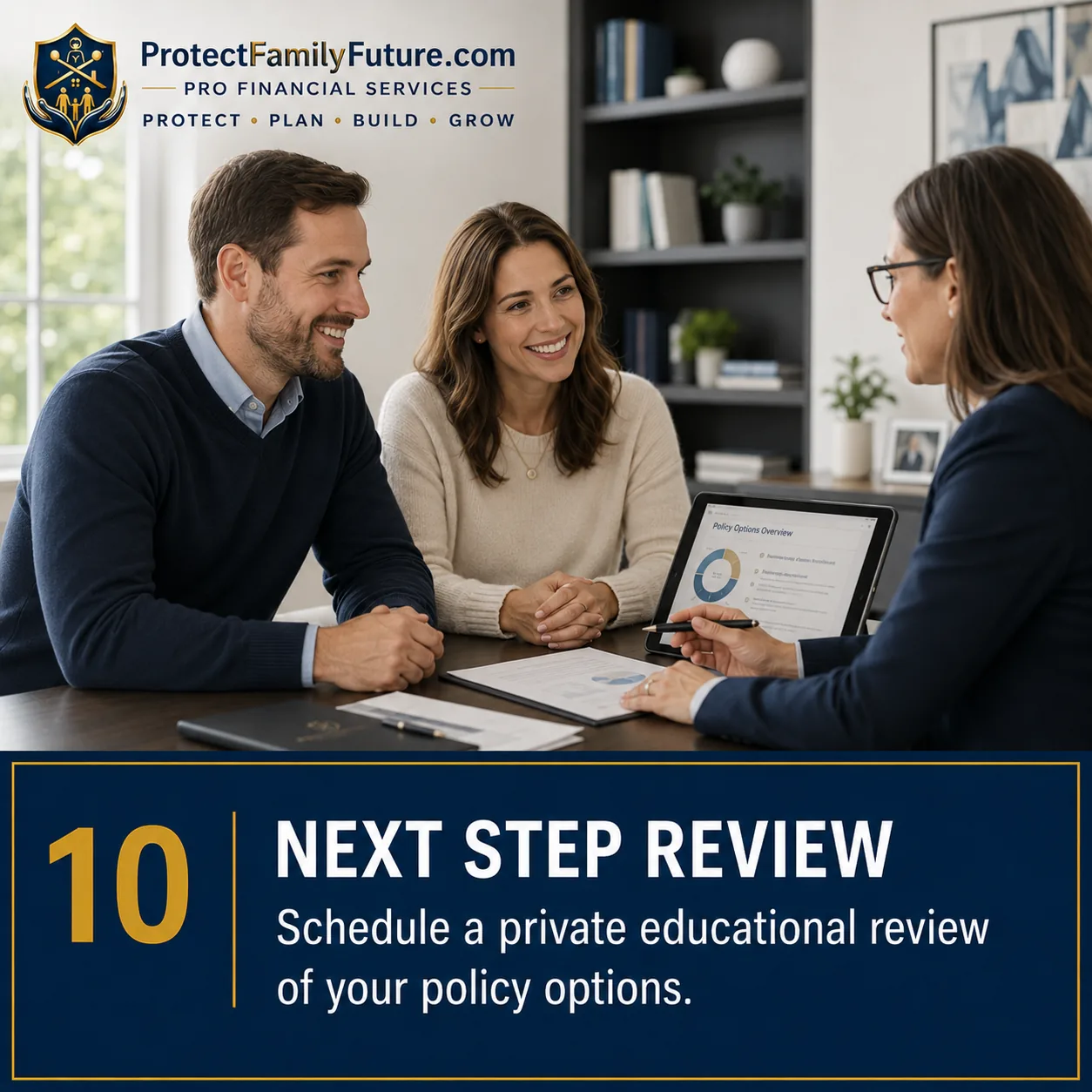
Start with a simple review. We help you understand what documents to gather, which policy questions to ask, and what areas may need professional review before any decision is made.
Share your details and we will help you understand which living benefits education topics may need attention.
Living Benefits Review
Health Event Planning
Bills & Income Risk
 Policy Checklist
Discovery Call
Policy Checklist
Discovery Call
A traditional death-benefit policy may help loved ones after death. Living benefit features, when available and approved under the policy, may add another layer of planning during qualifying health events.
Life insurance is often designed to help beneficiaries after death. Living benefit features, if included or added and if the claim is approved, may provide another planning option while the insured is still living.
Living Benefits Planning is not only about life insurance after death. It helps families understand whether a policy may include features that can provide access to benefits during qualifying health events, and how those features may affect income, bills, caregiving, and the protection left for loved ones.
Families often assume life insurance only matters after death, or assume living benefits automatically apply. A serious illness, chronic care need, terminal diagnosis, or income disruption can create urgent questions before the family has reviewed the policy.
A serious health event may reduce income while housing costs, utilities, debt, groceries, and family obligations continue.
Living benefits education helps families ask how policy features may fit with income replacement, emergency savings, and dependent care planning.

When a loved one becomes seriously ill, caregiving responsibilities may affect work schedules, household routines, and family finances.
Self-employed professionals and business owners may need to review how a serious illness could affect revenue, operations, and family cash flow.
Policy wording may treat critical illness, chronic illness, terminal illness, and long-term care-related provisions differently.

Using accelerated benefits during life may reduce the death benefit or other policy values available later, so families should understand the tradeoff.
Start with a simple education call and a policy review checklist. We will help you identify what to organize, which living benefits questions to ask, and where qualified professionals may be needed.
Schedule a private educational discovery call to review living benefits concepts, policy questions, rider awareness, health-event planning, and family protection priorities before a crisis happens.
This call helps you understand what to organize, which questions to ask, and how living benefits may fit into a broader family protection plan. We keep the conversation educational, private, and simple.
Select an available date and time for your Living Benefits Planning education call. Your confirmation and meeting details will be sent automatically.
If the calendar does not load inside this page, open the booking calendar directly.
Open Booking CalendarSend your contact details. If your preferred calendar time is not available, we will help you find the right next step for your Living Benefits Planning review.
Protect • Plan • Build • Grow

Explore education-first family protection planning designed to help families prepare for income protection, mortgage protection, final expenses, and long-term family security.

Learn how will and trust planning, estate planning, beneficiary preparation, and family asset protection conversations can help loved ones move forward with clarity.

Explore child future planning concepts designed to help families understand long-term growth potential, early planning, family protection, and legacy-building strategies.

Explore college savings planning, 529 plan education, education savings strategies, student loan burden awareness, and child future planning for families.

Living benefits education helps families understand how some protection strategies may provide access to benefits while still living during qualifying health events.

Explore tax-efficient growth, tax-advantaged income, retirement income planning, and legacy planning strategies designed to help families make smarter long-term decisions.

Start with a simple educational conversation. We’ll help you understand your goals and guide you toward the right financial education topic or next step.
Share your details and we’ll help you choose the right starting point.





















Help protect your loved ones from life’s unexpected events with customized solutions.
Learn More
Create reliable income for retirement and enjoy the lifestyle you’ve worked for.
Learn More
Access benefits while you’re living and protect your wealth and health.
Learn More
Build a brighter future for your children with smart education and financial planning.
Learn MoreTop recommended education areas for complete family 360° protection.
Explore essential education areas for family protection, children’s future planning, living benefits, health challenges, retirement strategies, and will & trust legacy planning..

Discover how family protection planning can help create confidence today and tomorrow.
LEARN MORE
Learn how early planning may help build a stronger foundation for a child’s future.
LEARN MORE
Explore education funding ideas designed to support children’s dreams and opportunities.
LEARN MORE
Help protect your wishes, loved ones, and legacy for future generations.
LEARN MORE
Learn how living benefits may help provide support while you are living, not only after death.
LEARN MORE
Explore planning options that may help during qualifying health events.
LEARN MORE
Explore tax-aware retirement strategies designed to help protect long-term income.
LEARN MORE
Review rollover, retirement income, and protection strategies for long-term security.
LEARN MOREExplore our education-first pathways for family protection, business opportunity, leadership development & community impact.

Protect what matters most.
Explore strategies designed to help safeguard your family’s future and create long-term confidence.
Learn More →
Earn. Lead. Impact. Freedom.
Create additional income and build a purpose-driven path while helping families.
Explore Opportunity →
Develop. Grow. Succeed.
Build leadership skills, unlock your potential, and create lasting impact.
Join Leadership Academy →
Serve. Educate. Empower.
Build stronger communities today while helping families prepare for a better tomorrow.
Make an Impact →
Learn how certain life insurance policy features may help during qualifying illness, how riders may be reviewed, and what families should understand before assuming a policy can be used while living.
If you cannot call now, use the form below or send a WhatsApp message. We will help you choose the right education path.
Book Discovery Call WhatsApp / Text Now Call / Text: (732) 318-8662Living benefits are policy features or riders that may allow access to a portion of benefits while the insured is living, usually only after certain qualifying health events and claim requirements are met.
No. Availability depends on the policy type, rider language, carrier, state, underwriting, and when the policy was issued. Older policies may not include the same features as newer policies.
Some policies may address terminal illness, chronic illness, critical illness, or long-term care-related situations. The exact definitions, limits, and claim requirements vary by policy and rider.
No. Living benefits are not health insurance and should not be treated as a replacement for medical coverage, disability coverage, long-term care coverage, or emergency savings.
Yes, accessing benefits during life may reduce the remaining death benefit, cash value, loan value, or other policy values. Families should review the impact before making decisions.
If available, gather your policy summary, rider pages, beneficiary page, premium information, recent statement, and carrier contact details.
Fill out the form, send a WhatsApp message, or text/call (732) 318-8662. We will follow up and help you choose the right next step.
If you cannot call now, fill out this form. We will contact you to help with your Living Benefits education questions.
Let’s review your goals, current policy questions, and how your family may prepare before a serious health event creates pressure.
Book Discovery Call WhatsApp / Text Now Call (732) 318-8662